Solid vs Liquid Sponge Cleansers
Compare solid and liquid makeup sponge cleansers by directions, dosing, rinsing, storage, and compatibility rather than assuming one format cleans better.
Choose a solid or liquid sponge cleanser by its compatibility with your tool and the routine you can follow. Either format can work when the formula is appropriate and rinsed as directed.
Start with the sponge’s instructions, then read the cleanser label. A convenient format is useful only when its directions, storage, and rinsing requirements fit the foam and your actual care setup.
Compare formats without assigning a winner
| Decision | Solid cleanser | Liquid cleanser |
|---|---|---|
| Loading | Pick up product as directed from a wetted surface or lather | Dispense a controlled amount as directed |
| Storage after use | Keep the bar and its container appropriately dry | Close the bottle and keep the opening clean |
| Common excess | Too much rubbing or product pickup | Over-dispensing before checking the first dose |
| Travel issue | A wet bar still needs appropriate handling | Bottle closure and leakage need attention |
| Foam suitability | Verify the actual formula | Verify the actual formula |
Read compatibility before fragrance or appearance
A cleanser should be intended or explicitly suitable for the sponge material. If you also want to wash brushes or puffs with it, verify those uses separately instead of assuming one product covers every tool.
A solid kitchen or body soap is not automatically equivalent to a cosmetic-tool cleanser. A liquid face cleanser is not automatically the right choice either. The directions for the combination matter.
If your sponge has special construction or material restrictions, contact its maker when the cleanser information is unclear. Do not use an uncertain product simply because the alternative would require another purchase.
Use a solid cleanser without rough scrubbing
Follow its directions for wetting, loading, and lathering. Work with gentle contact rather than pushing the sponge hard against a textured surface to force pigment out.
Do not dig a pointed tip into the bar or repeatedly twist the foam across it. A tool can become damaged before the stain disappears, and the lighter color does not undo the damage.
Rinse both tool and any relevant cleaning surface appropriately. Then handle the bar and its container according to their storage directions rather than closing a wet product into a residue-filled case.
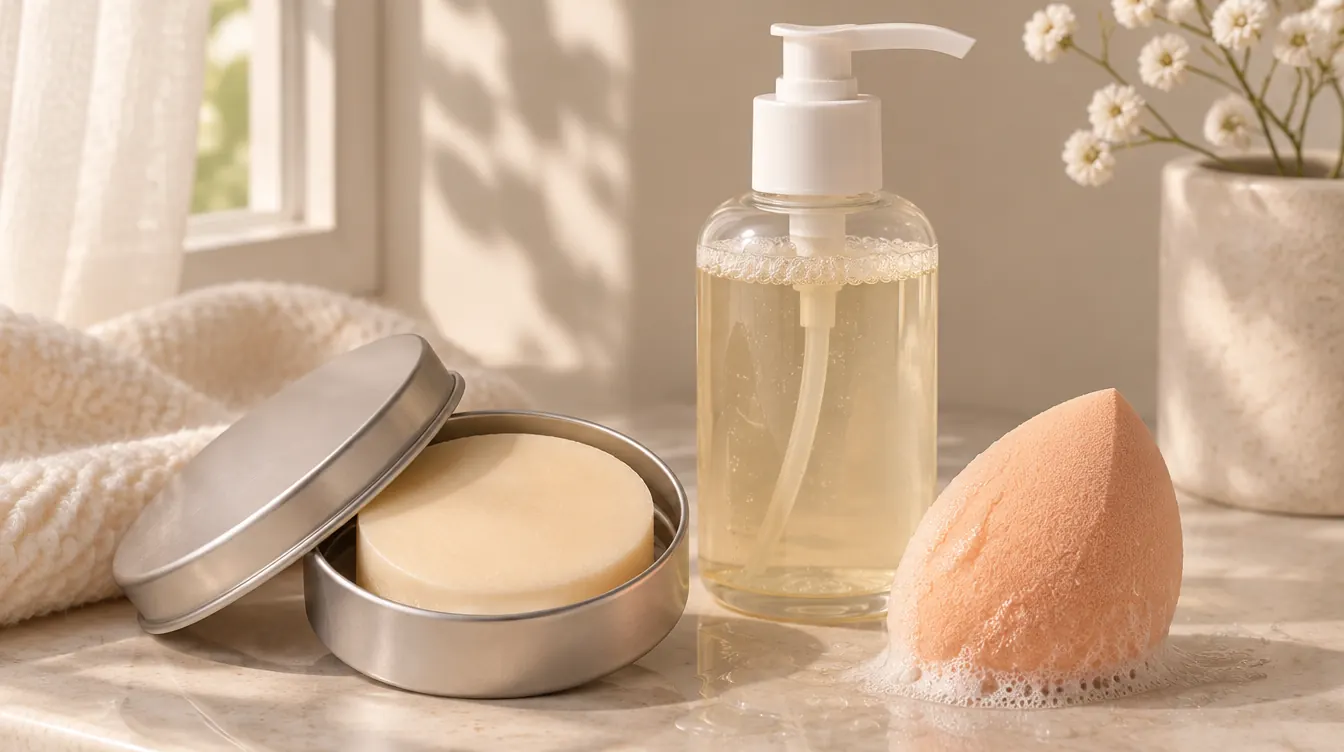
Dose a liquid cleanser gradually
Begin with the labeled amount or a small directed dose. Work it through the foam gently and observe the first wash before automatically dispensing more.
A large pour may increase rinsing time without improving an old pigment stain. If foam remains full of lather, rinse first instead of treating every squeeze as a reason to add cleanser.
Keep the bottle opening away from used foam when dispensing. Close the container while you wash, and do not return diluted used solution to the original bottle.
Compare the rinsing stage honestly
Both formats can leave residue if used heavily or rinsed incompletely. Check the actual wash and rinse rather than assuming a clear-looking liquid must be easier to remove than a bar.
Use clean water and gentle compression as appropriate to the tool. Do not wring tightly or squeeze with fingernails to accelerate the process.
The sponge washing guide covers that technique. A useful cleanser choice makes the method manageable, but it does not remove the need to follow it.
Keep stain removal separate from tool condition
A stable makeup stain may remain after appropriate washing. The aim is suitable care of the tool, not a guarantee of a spotless original color.
If the sponge has unusual odor, suspicious spots, tearing, or another concerning change, stronger cleanser is not the default answer. Set it aside and assess replacement.
Do not transfer product marketing such as deep cleansing or antibacterial into a claim that your home routine sterilizes foam. Specific claims have conditions, and cleanser format alone tells you nothing about them.
Choose a practical storage arrangement
A solid needs a suitable place after use, especially if it becomes wet during cleaning. The provided container may be useful for dry storage without necessarily being the correct place to close a freshly wet bar immediately.
A liquid needs a secure closure and a clean dispensing opening. Leaks and residue around the cap create their own practical maintenance, even though the product remains in a bottle.
The sponge itself still needs appropriate drying regardless of cleanser choice. Our sponge drying guide explains why a convenient cleanser cannot compensate for sealing damp foam in a makeup bag.
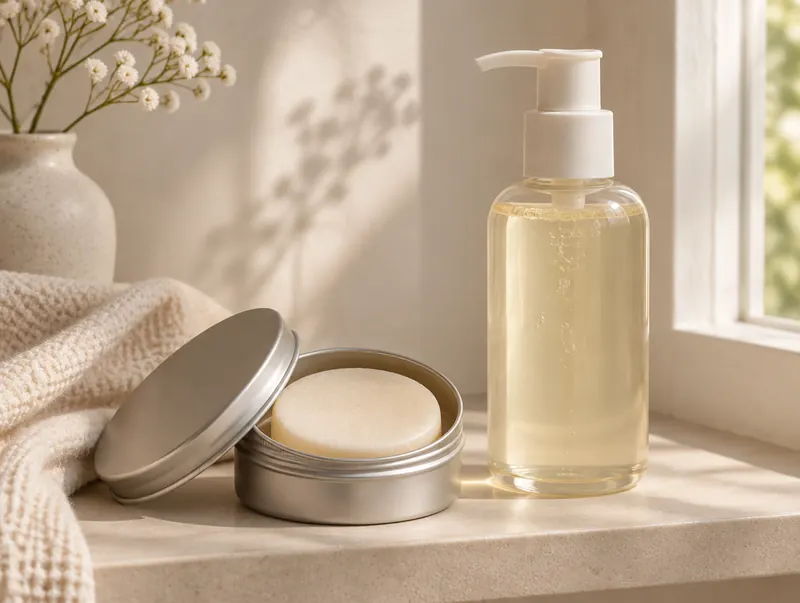
Assess value from your actual dose
Cost per ounce can help compare similar products, but it is not a complete measure across very different formats or concentrations. A theoretical large wash count is not useful unless supported by clear product information and realistic use.
Check the current price and package size for the exact item. Count only the accessories you will use if a bundle includes a mat, case, or extra tool.
Avoid paying more solely for a stronger-sounding claim you do not need. Equally, a very low price adds little value if the product’s suitability remains unclear or you routinely dispense far more than required.
Account for the place you will wash
A format that is convenient at home may need a different arrangement during travel. Consider access to water, a clean work surface, and appropriate post-use storage before packing either product. Neither a small bottle nor a compact bar removes those requirements. Choose for the complete washing setup rather than assuming the smaller package makes every stage easier.
Make a controlled switch
- Keep the same appropriate sponge and normal makeup routine.
- Read both tool and new cleanser directions.
- Use a modest directed amount and gentle movement.
- Complete the rinse before judging the result.
- Inspect the tool’s condition and manage drying separately.
- Note convenience, dosing, and any residue without claiming a laboratory performance result.
Do not compare an overloaded liquid wash with a carefully dosed solid and attribute everything to format. Change one practical variable at a time.
Let comfort and clear instructions guide the choice
Choose the format you can dose, rinse, and store consistently. If fragrance or a known ingredient sensitivity matters, inspect the specific label rather than assuming natural or solid means less likely to cause problems.
Follow applicable product-testing directions and do not intentionally expose yourself to a known allergen. Stop for irritation and seek qualified advice for persistent concerns.
Use the cleaning frequency guide to fit the chosen cleanser into regular care. The best practical format is the one that supports the whole routine, including rinsing and drying, without encouraging harsh handling or attempts to rescue suspect foam.
Frequently asked questions
Is any soap bar suitable for a makeup sponge?
No. A solid format alone does not establish compatibility with cosmetic foam. Use the tool and cleanser directions instead of assuming a household bar has the same intended use.
Does liquid cleanser rinse out automatically?
No. Dose and formula matter, and you still need thorough rinsing. If visible lather remains, continue the appropriate rinse rather than immediately applying more product.
Does antibacterial wording make a cleanser a mold rescue?
No. Do not transfer a stated product claim into a promise that suspect porous foam can be restored at home. Discard a questionable sponge rather than escalating cleaners.
Should I choose only by cost per ounce?
Use that figure cautiously. Concentration, dose, package format, and the amount you actually use may differ. Compare practical cost and care fit without inventing a universal number of washes.