What Are Dip Powder Nails? A Beginner Guide
Understand how dip powder nails are built, what the liquids and powder do, and which application, removal, and safety decisions matter before trying them.
Dip powder nails are a cosmetic coating made with compatible liquids and powder, then hardened and finished according to the system’s directions. Many traditional dip methods use resin and activator rather than a curing lamp. Gel-based variations exist, so the word dip does not identify one universal procedure.
Before choosing a kit, understand the whole cycle: preparation, application, daily wear, removal, and inspection of the bare nail. A durable-looking finish is only one part of that decision.
What the powder and liquids do
The powder contributes material and color to the coating. A compatible base liquid attaches it during application, while the system’s activator and finishing steps create the intended hardened result.
Names and sequences vary. A bottle called finish gel within one resin-based system does not automatically mean it requires a gel lamp, and another top coat may genuinely need one. Read the exact directions rather than interpreting a product name in isolation.
Do not combine unrelated liquids because their labels sound similar. A coherent system gives you clearer instructions for layer order, hardening, and removal than an improvised mixture of products.
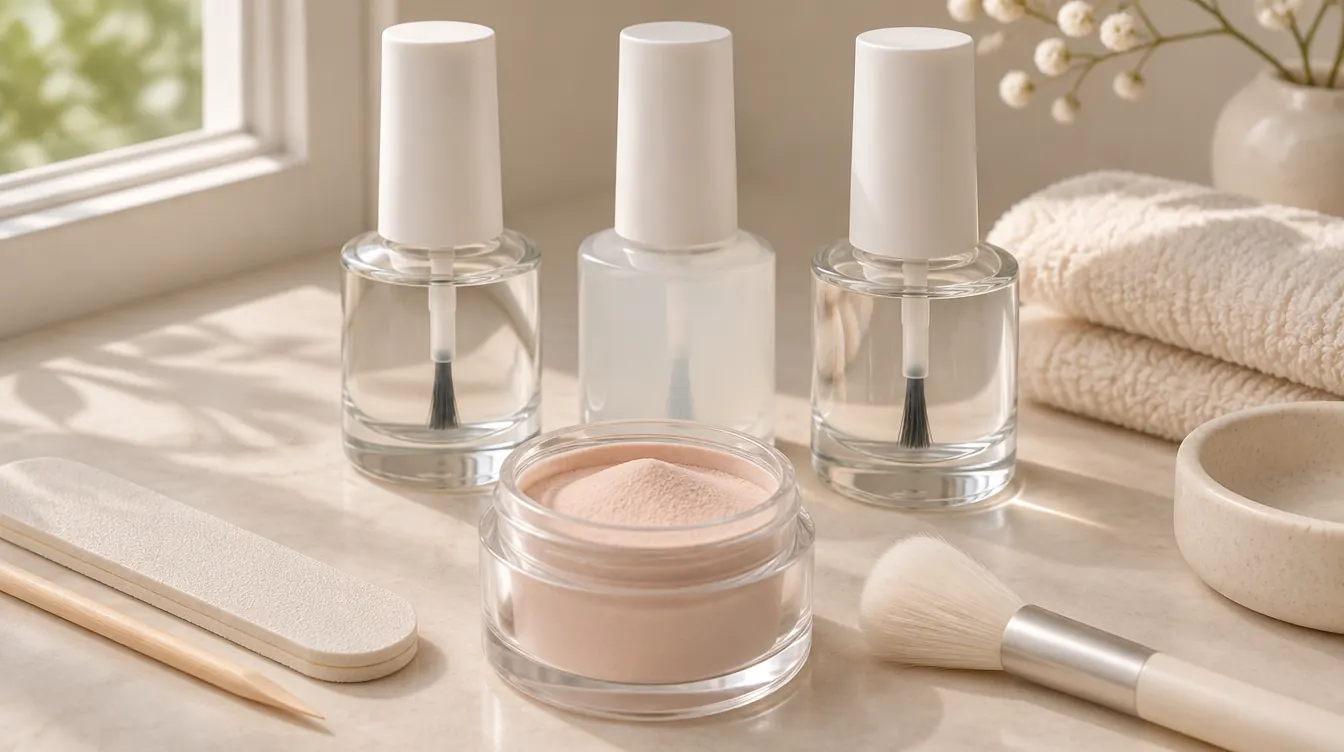
Compare the stages of a dip manicure
| Stage | Main task | Decision before beginning |
|---|---|---|
| Preparation | Start with suitable clean natural nails | Whether nails and surrounding skin are appropriate for coating |
| Base and powder | Build controlled layers | Exact system, dose, and number of layers |
| Hardening | Complete the system’s directed stage | Required activator and timing |
| Shaping and finish | Refine the coating as permitted | Avoid overfiling the natural nail |
| Wear | Inspect the coating and comfort | Respond to lifting rather than hiding it |
| Removal | Soften and remove as directed | Supplies and time available before application |
The order and details must come from the products you actually use.
Lamp-free does not mean risk-free
A traditional resin-and-activator dip method can be lamp-free. That avoids a lamp stage, but it does not remove the need for careful chemical handling, ventilation, or keeping product off skin.
Some methods use gel products with powder and require their specified lamp and curing instructions. Do not move between these methods casually or assume air drying completes a gel product’s cure.
The dip, gel, and acrylic comparison explains the broader choices. Pick the actual method rather than choosing from a single headline claim such as no light required.
Know what changes when extensions are added
Dip does not inherently require tips or extra length. An overlay on suitable natural nails and a manicure built over extensions involve different construction and maintenance decisions.
Longer length can change how the manicure fits ordinary activities. Do not treat an attractive long photograph as the default beginner goal.
If you want extensions, learn the system’s intended method and consider professional help. Adding length is a separate skill, not an accessory that automatically makes a basic powder kit complete.
Understand personal powder handling
Avoid dipping into powder used by other people. A personal single-use portion or an appropriate pour-over method keeps the main supply separate from direct shared nail contact.
Do not return used portion leftovers to the original jar. A clean-looking powder surface does not establish that it should be shared between people or mixed back into untouched stock.
Keep brushes and implements personal and maintained appropriately. Good organization is part of the method, not a cosmetic extra that matters only in a salon.
Consider skin and nail suitability first
Do not coat painful, damaged, discolored, lifting, or otherwise concerning nails to hide the appearance. Unexplained changes deserve appropriate assessment rather than another opaque layer.
Leave protective skin around the nail alone instead of aggressively cutting or pushing it back to create more application space. Keep liquids off skin and read all warnings before opening them.
For a first dip application, AAD guidance recommends trying one nail and waiting seven days before proceeding with the rest. If redness, itching, or swelling appears around that nail, remove the color and skip dip until the skin heals. Never dab raw liquids or powder onto your skin as a home allergy test. If you have a previous nail-product reaction, seek a dermatologist’s guidance before another system.
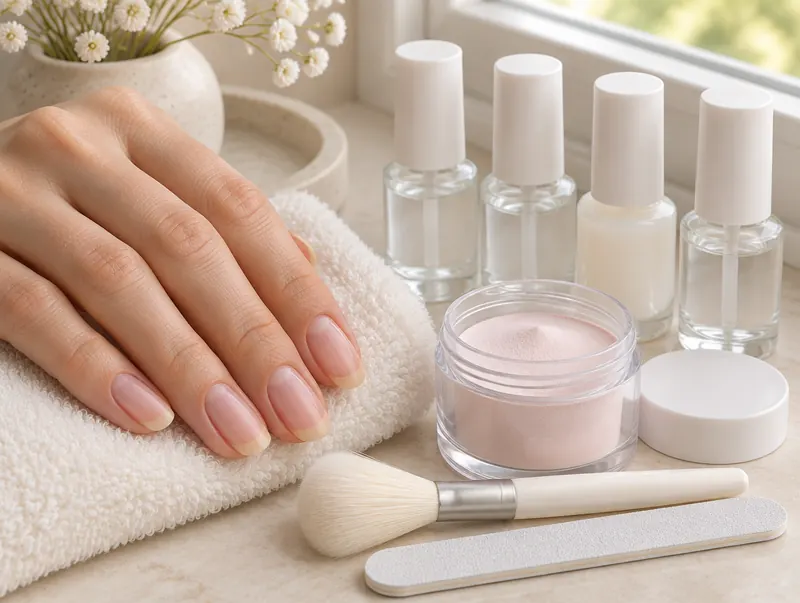
Plan removal before the first layer
Dip is not a finish to peel away casually when color becomes inconvenient. Many systems use acetone-based removal, with any surface filing limited to the coating under appropriate instructions.
Acetone needs ventilation and separation from flames, sparks, and heat. Do not heat it or assume a faster online removal trick is appropriate for your kit.
The dip removal guide focuses on this stage. A kit that seems affordable initially is incomplete for you if the required removal supplies or method are missing.
Check readiness in a practical order
- Identify whether the kit uses traditional resin and activator or a different system.
- Read every stage, including removal, before opening reactive liquids.
- Check the intended user and whether the method requires training you do not have.
- Arrange a personal powder portion and a workable ventilated setup.
- Resolve any nail-condition or previous-reaction concerns before proceeding.
Decide whether home application fits your routine
You need a stable work area, sufficient lighting, uninterrupted time, and the ability to control liquids with both hands. A rushed first attempt immediately before an event makes corrections harder.
You also need to identify lifting, damaged coating, or discomfort during wear rather than treating every change as a reason to add more product. More layers cannot make an unsuitable nail ready for a manicure.
The starter-kit checklist helps you evaluate supplies by task rather than jar count. A simple coherent kit may be more useful than a large assortment of colors and unrelated liquids.
Count the routine beyond the application
Think about where the supplies will be stored, when removal can happen, and how you will respond if the coating needs attention during a busy week. A manicure that is convenient to apply can still be inconvenient to maintain.
If you mainly want a short-lived color change, ordinary polish may meet that goal with a different process. If you want a durable overlay, learn its full care cycle first. There is no need to choose the longest-wearing category when its extra handling does not fit your habits. The useful choice is the one whose complete method you can follow comfortably, not simply the finish that looks most substantial in a photograph.
Learn the method without treating it as nail care treatment
A coating can change appearance and feel, but it does not treat a nail condition or guarantee healthier growth. Product names featuring vitamins or strengthening language should not replace appropriate expectations.
If you proceed, use the at-home application guide as a planning framework alongside the complete manufacturer instructions. Practice controlled handling before expanding into extra length or complex designs.
Stop for irritation, swelling, breathing symptoms, or pain and seek appropriate care. A successful dip routine includes knowing when to pause, remove correctly, or obtain professional help, not simply achieving the longest possible wear.
Frequently asked questions
Is dip powder the same as ordinary nail polish?
No. A dip system builds a coating through powder and compatible liquids, while ordinary polish follows its own application and drying method. Removal and upkeep are different too.
Does powder mean there are no chemicals?
No. The powder and liquids are chemical products with ingredients, warnings, and handling requirements. Low odor or a lamp-free method does not establish that a system is free of irritation or allergy concerns.
Do dip nails have to be long?
No. Dip can be applied over suitable natural nails, while extensions add a separate construction step. Length is a design decision rather than a requirement for the powder method.
Can I peel dip off when I want another color?
Do not peel or pry the coating away. Follow the exact removal instructions or seek suitable professional help, because forceful removal can damage the natural nail.