Foundation Tips for Dry Skin
Apply foundation on dry-feeling skin with preparation, thin selective layers, gentle blending, and limited powder instead of covering every flake.
Apply foundation on dry-feeling skin with comfortable preparation, a thin layer, and gentle blending. Reduce makeup over visibly flaky places rather than repeatedly coating them. Powder only where it serves your preferred finish, and do not expect foundation to treat dryness or remove natural texture.
The most useful adjustment may be less product on one area rather than a new full-face routine. Start by distinguishing a comfortable dry-feeling surface from irritation that should not be covered and rubbed.
Assess comfort before coverage
If skin feels sore, cracked, or persistently irritated, pause cosmetic application there. Makeup does not need to be completed at the cost of discomfort. Seek a dermatologist’s advice for ongoing dryness or troublesome changes.
If skin is comfortable but foundation catches on texture, focus on application amount, movement, and preparation. Those are cosmetic variables you can adjust without trying to diagnose the cause of the dryness.
Look at the area before applying anything. A patch already visible on bare skin is different from a ridge created only after foundation. This helps you avoid blaming the sponge for every uneven surface.
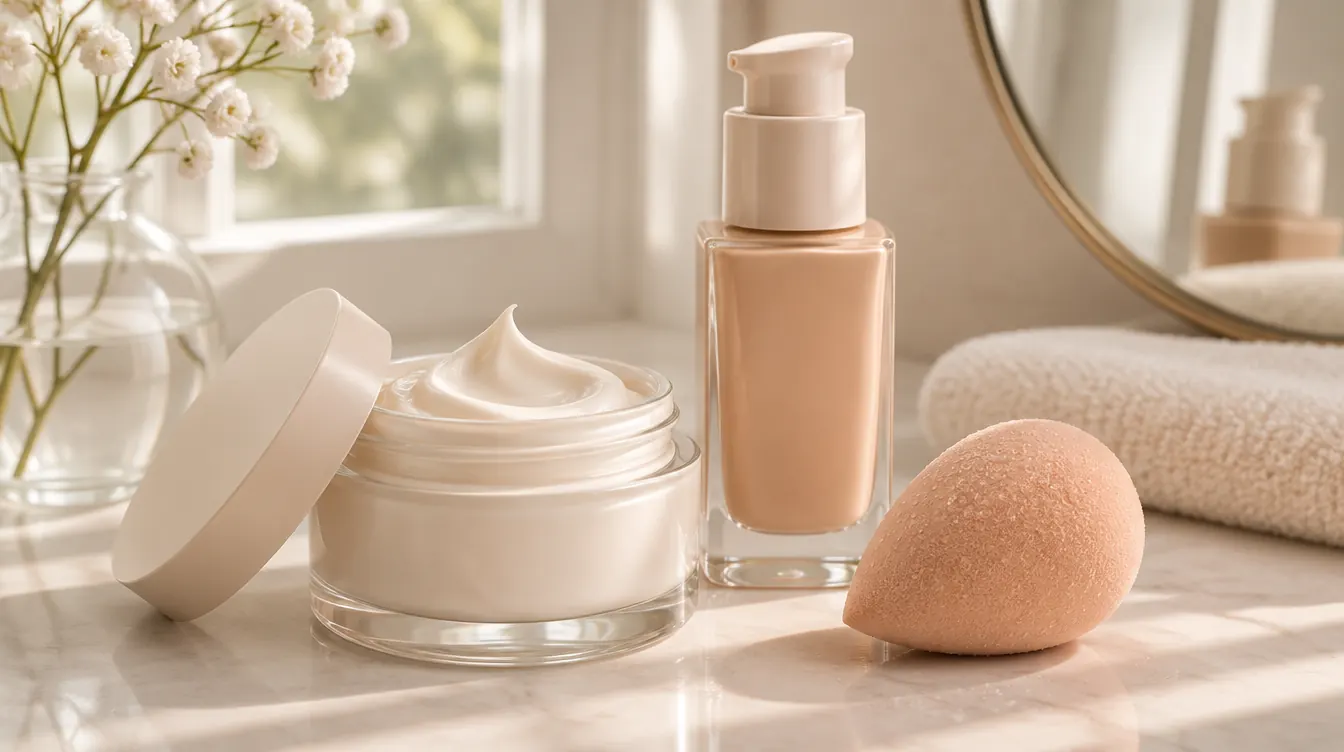
Choose comfortable preparation rather than many layers
AAD guidance supports choosing moisturizer according to skin needs and cautions against aggressively exfoliating dry peeling skin. A comfortable cream may suit some dry-skin routines, but the right product remains individual.
Use your usual suitable moisturizer as directed and allow it to settle. More layers are not automatically better for the foundation sitting above them. A thick slippery surface can make the cosmetic layer move or pill.
Keep sunscreen use consistent with its directions. Do not mix foundation into it or rub it away to make makeup grip. Cosmetic finish and sun protection are separate jobs.
Evaluate the foundation by its actual behavior
| What you want | What to compare | What not to assume |
|---|---|---|
| Comfortable wear | Feel during normal wear | Every dry-skin label suits you |
| Light evening of tone | Thin coverage and easy edges | More coverage smooths flakes |
| A softer-looking finish | Amount and application in ordinary light | Dewy means texture-free |
| Local coverage | Small concealer additions | The whole face needs equal opacity |
| Less visible powder | Selected setting areas | No powder is always required |
A formula that feels comfortable to one person may not suit another. If possible, compare a properly provided sample or a small purchase within retailer policies rather than changing several full-size products at once.
Begin with a small foundation amount
Dispense a little and work through one manageable area. Keep the first layer thin enough that you can see what needs more before adding it. A broad heavy placement leaves more product to settle around texture.
Use the foundation in its intended format. A fluid liquid, cream compact, and stick may need different pickup methods. Our liquid sponge tutorial covers the first, while firmer formats may be easier to place with another suitable tool.
Do not assume dry skin requires a special number of pumps. Dispensers and formulas vary. Product amount should follow the actual area and desired coverage rather than a universal count.
Blend with less friction
- Prepare the skin comfortably and let the layers settle.
- Place a small amount on one area that needs evening.
- Spread or tap gently using a clean suitable tool.
- Use fewer contacts on visible texture rather than pressing harder.
- Inspect from normal distance before adding coverage.
- Leave a lighter layer where additional makeup emphasizes flakes.
For wet-use foam, blot until only damp. Water dripping onto the foundation is not a substitute for moisturizing beforehand. A damp sponge changes application mechanics; it is not a dry-skin treatment.
If a brush repeatedly catches visible flakes, stop buffing aggressively. Try lighter placement or a different suitable tool, but do not keep rubbing until the patch appears flat.
Treat flaky areas as a place to use less
Opaque makeup can change color without smoothing the underlying surface. A thick layer over a flake may make its edge more visible, particularly as the foundation sets.
Do not pick, scrape, or pull at skin with the applicator. If the area is comfortable, a very thin cosmetic layer may be the most practical result for that day. It is acceptable to leave some texture visible.
If a flake becomes coated and awkward, gently remove that small makeup section if needed instead of layering more over it. Follow relevant skin-care and sunscreen directions when preparing again, and stop if removal causes discomfort.
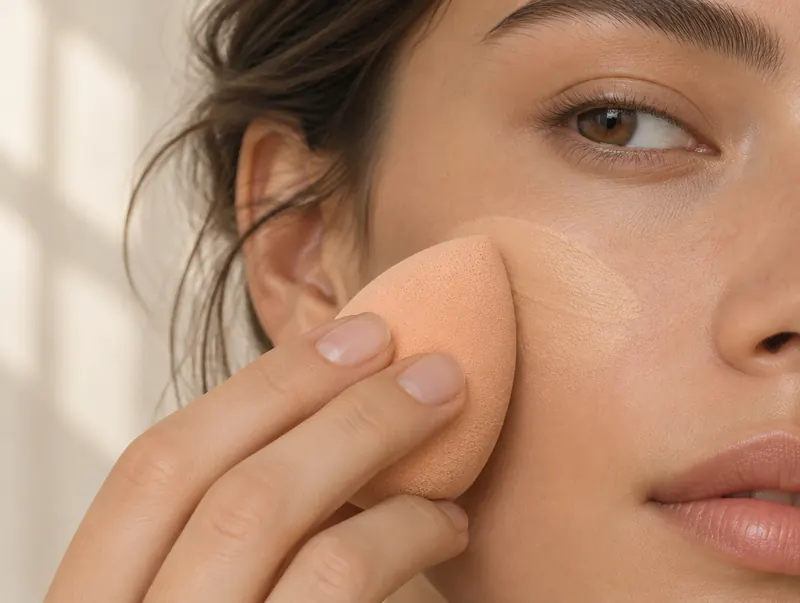
Add concealer only for a specific coverage need
A small patch of uneven color may need a targeted concealer rather than another full foundation pass. Blend its perimeter with minimal pressure and keep the surrounding completed base alone.
For under-eyes, use a modest amount and assess natural movement before setting. Our concealer guide explains how to reduce collected excess without treating every fold as a problem.
Be careful not to confuse brightness with coverage. A dramatically lighter concealer can draw attention to the thickness of a layer even when the original foundation amount was restrained.
Set selectively and inspect before finishing spray
Powder can be useful in a small area even when the rest of the skin feels dry. Use a controlled amount only where you want its effect rather than applying a thick full-face coat by habit.
If a surface looks dusty, remove loose excess gently before adding anything else. Follow the spray’s directions if it belongs in your routine.
The cakey foundation repair guide separates loose powder from pilling and heavy foundation. Those problems should not all receive the same wet-sponge or spray correction.
Reassess when your usual layer changes
A routine that felt comfortable before may need a small adjustment when conditions or other products change. Compare a lighter foundation amount first rather than immediately buying several richer formulas. Note whether the issue was already visible before makeup or appeared only after setting. That distinction helps you choose between preparation, foundation placement, and powder changes without guessing at a skin diagnosis.
Keep touch-ups lighter than the original application
Later, look for the specific change: missing color coverage, a collected line, or more visible texture. Do not automatically add foundation because the base no longer looks freshly applied.
A tiny fresh amount on a genuine gap may help, while another layer on a flaky patch may not. Use clean tools and avoid carrying damp foam sealed in a bag for later reuse.
For your next application, change one variable first, such as less powder or a smaller foundation portion. Follow product patch-test instructions where provided for new formulas. Comfortable repeatable application is a better target than hiding every surface feature through escalating layers.
Frequently asked questions
Does dry skin always need a dewy foundation?
No. Finish is a preference, and a shiny layer can still emphasize texture if heavily applied. Compare comfort, coverage, and wear rather than choosing by the word dewy alone.
Should I scrub flakes off right before makeup?
Avoid aggressive scrubbing as a makeup rescue, especially if skin feels irritated. A gentler routine and less coverage over the area are more practical than forcing an immediately smooth surface.
Can I add face oil to the foundation bottle?
Do not alter the original container to improvise a new formula. Choose suitable preparation or a foundation you prefer as packaged, and follow any specific mixing directions provided by the maker.
When should dryness stop being a makeup question?
Pain, cracking, bleeding, persistent stinging, or ongoing irritation deserve a dermatologist’s advice. Stop applying over uncomfortable areas instead of treating foundation as a skin treatment.