How to Fix Cakey Foundation
Fix heavy-looking foundation by identifying excess makeup, powder, or pilling, then lift, blend, or restart small areas without adding another thick layer.
Fix cakey foundation by stopping additional layers and identifying what is sitting on the surface. Loose powder needs a different response from thick foundation, rolled product, or a patch that has been repeatedly lifted. Start with the smallest correction and restart locally when further blending makes the area worse.
Do not judge all visible texture as failure. Skin has lines, pores, and movement. The repair goal is a less heavy, more even cosmetic layer, not a completely textureless surface.
Inspect before reaching for another product
Step back from the mirror and look in ordinary light. Check whether the issue affects the whole face or only the nose, cheeks, or mouth corners. A small localized problem does not require another full-face application.
Think about when the appearance changed. A heavy base immediately after foundation points you toward loading or placement. A sudden dusty finish after powder suggests a different first correction. Rolls appearing during blending may be pilling rather than simple thickness.
Use a clean fingertip or tool only when needed to assess the layer gently. Do not repeatedly rub the surface while deciding; that can create another issue on top of the original one.
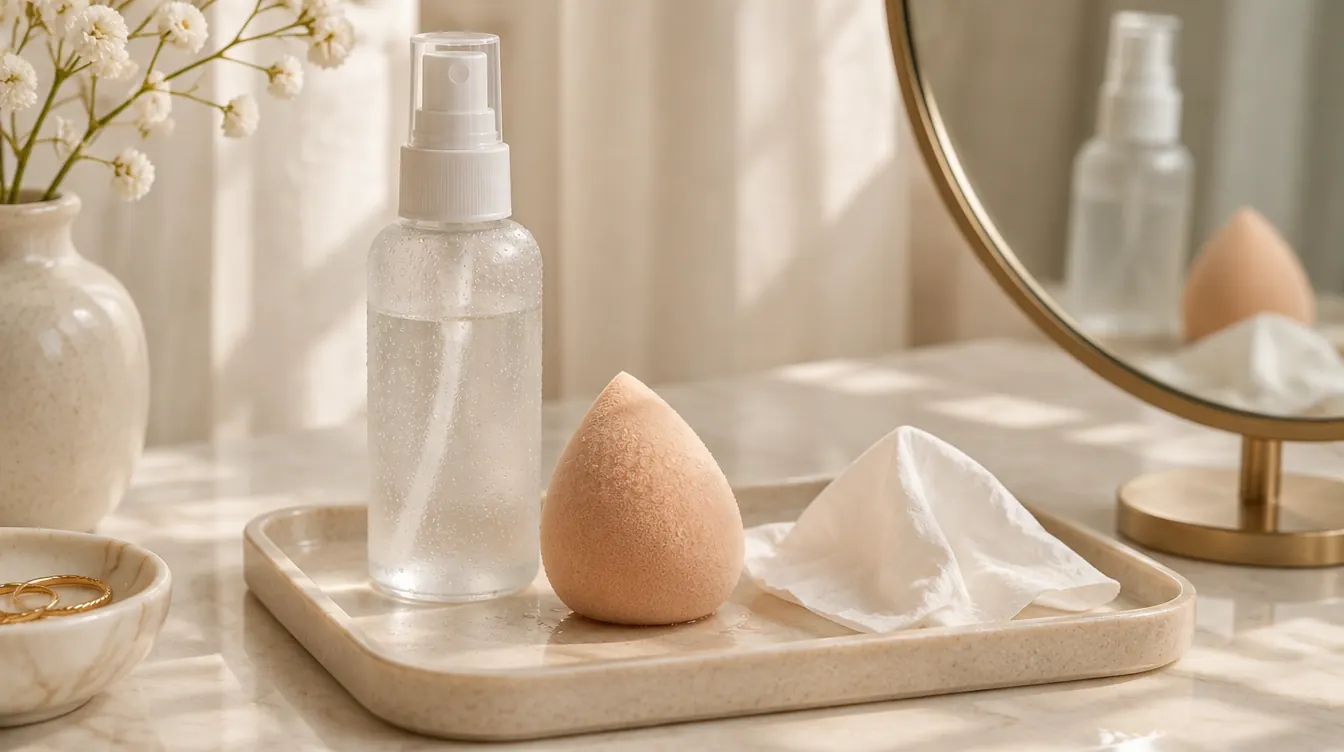
Choose the smallest useful repair
| What you see | First response | Avoid |
|---|---|---|
| Loose powder sitting on top | Lift excess with a suitable soft brush | Adding more liquid products immediately |
| Thick foundation boundary | Light controlled taps with an unloaded tool | Another full-face coat |
| Rolled particles | Gently remove loose pieces and assess locally | Grinding them into the layer |
| Bare patch after overworking | Stop and consider a small restart | Repeated forceful blending |
| Flaking with discomfort | Stop cosmetic rubbing and prioritize comfort | Scrubbing to create a smooth canvas |
These categories guide application decisions, not a diagnosis of skin condition. Persistent irritation or painful cracking deserves a dermatologist’s advice rather than more makeup experimentation.
Remove loose powder first
If the problem appeared after setting, use a clean appropriate soft brush to lift visible loose excess gently. Keep it away from your eyes and avoid flicking powder into a cloud.
Do not scrub the foundation underneath. Use a few light passes, then inspect. The remaining layer may already look less heavy once loose powder is removed.
If powder is firmly combined with a thick base, additional brushing may do little. Stop before you create patchiness. A small restart can be more predictable than trying to sweep away a layer that is no longer loose.
Soften an excess-foundation edge
Use a clean unloaded sponge if appropriate for the formula. For wet-use foam, prepare and blot it until only lightly damp. It should not release water onto the finished base.
Tap briefly across the visible boundary rather than repeatedly pressing the center of the whole cheek. Rotate to an unused surface if the first becomes coated, then inspect before continuing.
A little excess may transfer to the tool. That is different from trying to squeeze absorbed foundation back onto your skin. The goal is a controlled reduction, not recovering every bit of makeup already used.
Handle pilling as loose material
Small rolls may form when layers are disturbed. Do not assume they are simply dry skin or that more foundation will melt them away. Repeated sponge work can spread particles across a larger area.
Gently remove loose pieces with a suitable clean tool without scratching. If a stable surface remains, you may be able to correct only a small coverage gap. If the layer keeps rolling, remove and restart that section instead.
Do not automatically add another primer to a pilling routine. More layers make the cause harder to isolate. The primer decision guide explains how to compare an optional primer without treating it as a universal rescue.
Restart a small area in a controlled sequence
- Identify the smallest affected section you can reasonably isolate.
- Remove its makeup gently using a suitable product as directed.
- Allow the area to become comfortable and follow necessary skin-care and sunscreen directions again.
- Let the prepared surface settle before applying makeup.
- Add a smaller fresh foundation amount and blend its boundary.
- Inspect before reintroducing concealer or powder.
Do not rub sunscreen off casually and then ignore its application instructions when restarting. Likewise, do not use a harsh remover near the eye simply because the patch is small.
If removal leaves the area sore or irritated, stop there. Finishing a cosmetic look is less useful than keeping application comfortable.
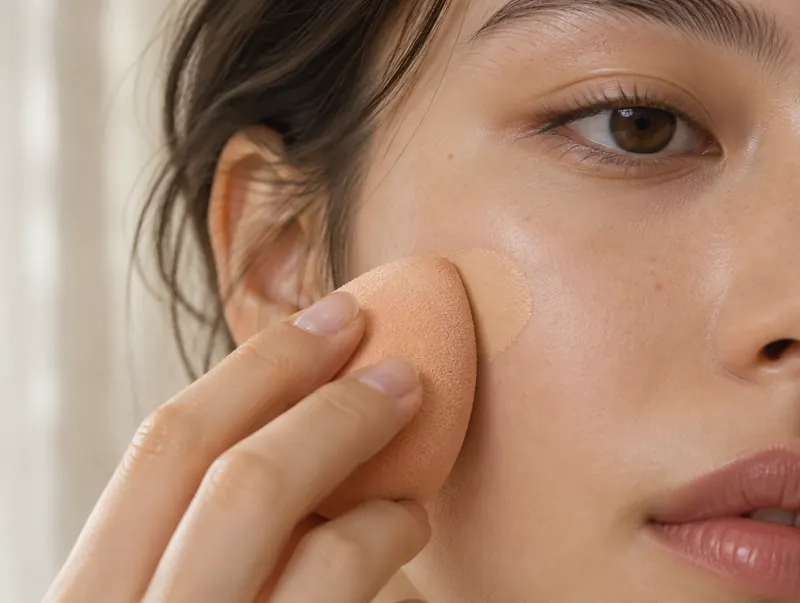
Adjust your next application by the actual trigger
Too much foundation at the start
Dispense a small portion and place it on one section. Inspect that layer before loading more. The coverage-building guide explains how selective opacity can reduce the need for repeated full-face passes.
Too much powder afterward
Reduce the pickup and setting area. You may need powder only around selected shiny or tacky places rather than everywhere. Compare the result later before deciding a lighter amount is insufficient.
Product sets before you blend
Use smaller sections and finish each boundary promptly. Harder pressure does not restore working time. If the formula’s pace repeatedly conflicts with your routine, consider another formula or tool.
Skin feels uncomfortable before makeup
Do not ask foundation to correct stinging, cracking, or active irritation. For comfortable but dry-feeling skin, the dry-skin foundation guide focuses on a gentler cosmetic approach. Ongoing skin concerns need appropriate professional care.
Keep midday repairs modest
Before touching up, identify whether you see excess surface oil, missing coverage, or accumulated product. These require different actions. Do not treat every visible change as a reason for another foundation layer.
If using blotting paper, press gently rather than rubbing. Then inspect before adding makeup or powder. Removing surface excess may change the appearance enough that no additional coverage is needed.
Use a clean personal tool and a very small fresh amount for a genuine coverage gap. A dirty sponge taken from a sealed damp bag is not a suitable shortcut for a quick repair.
Know when to leave the layer alone
If the makeup looks even at normal distance and feels comfortable, stop correcting tiny details visible only in extreme close-up. More manipulation can introduce the very thickness or patchiness you were trying to avoid.
Do not combine several new remedies during one rushed application. Water, oil, sprays, powder, and primer layered together produce an unpredictable new mixture rather than a controlled repair.
Note the step that first caused trouble and change one variable on your next ordinary makeup day. A smaller portion, a narrower setting area, or less repeated blending gives you a clear experiment without rebuilding your entire routine.
Frequently asked questions
Does cakey foundation mean my skin is dry?
Not necessarily. Excess foundation, powder, pilling, formula timing, and tool movement can also create a heavy-looking result. Look at when and where the issue appeared before choosing a correction.
Can setting spray fix every cakey base?
No. A finishing spray cannot reliably remove excess makeup or rolled product. Follow its directions if you use one, but do not soak your face to dissolve a heavy layer.
Should I exfoliate immediately and start over?
Do not scrub irritated or flaky skin to rescue makeup. Remove the affected makeup gently if needed, use comfortable care, and avoid an aggressive last-minute treatment.
When is restarting easier than repairing?
Restart a small area when each extra pass lifts, pills, or thickens the layer. Preserve surrounding makeup where practical instead of repeatedly adding product over an unstable patch.