Primer: Do You Need It Before Foundation?
Decide whether primer adds value to your foundation routine by naming the problem, choosing a useful role, and comparing one optional layer at a time.
You do not need primer when your foundation already applies and wears the way you prefer. Consider an optional primer only after naming a specific cosmetic problem or desired effect. Then test a small directed amount while keeping the rest of your preparation consistent.
The useful question is what this added layer does for your routine. A product that adds another step without an observable benefit does not need to stay simply because a tutorial includes it.
Name the job before choosing a product
Common primer goals include a different surface feel, a more matte appearance in selected areas, added-looking radiance, or a temporary smoothing effect. These are cosmetic goals, not promises to treat skin conditions or change skin structure.
Be specific about the issue. Foundation catches beside the nose after repeated rubbing is different from wanting a more luminous cheek. One may be an application problem; the other may be a deliberate finish preference.
If your current base is comfortable and even, no correction may be needed. You can keep the routine simple rather than searching for a problem to justify another product.
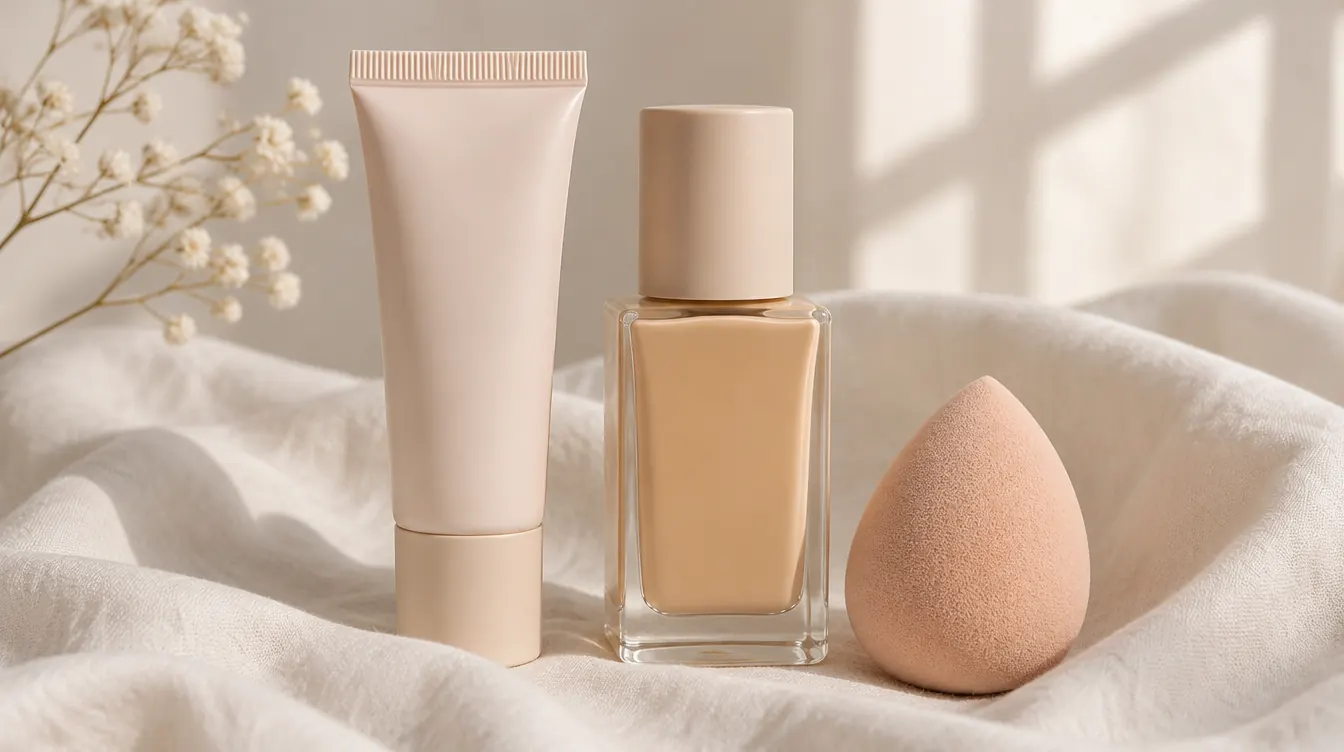
Compare common primer roles
| Intended role | What to assess | What not to assume |
|---|---|---|
| Mattifying | Preferred finish in a shiny area | No later shine for everyone |
| Radiance-focused | Amount and placement of visible sheen | More opacity or sun protection |
| Grip-focused | How foundation applies and later looks | Every formula wears longer |
| Smoothing | Temporary visual surface effect | Permanent pore or texture change |
| Hydration-focused | Comfort and cosmetic finish | Replacement for all needed skin care |
| Color-adjusting | Small tone effect under the base | Full concealer coverage automatically |
These categories overlap in marketing. Read the exact description and directions rather than assuming every product with primer in its name has the same texture or purpose.
Keep moisturizer, sunscreen, and primer separate
Moisturizer serves your skin-care routine, sunscreen has its own protection instructions, and primer is an optional cosmetic layer. One product may combine roles, but verify its label rather than assuming the word primer covers everything.
Do not reduce sunscreen or mix foundation into it for a better-looking base. Follow its application and reapplication directions regardless of whether primer is part of the makeup sequence.
Allow preparation to settle before adding another layer. A surface that is still very slippery or easily disturbed can make it harder to judge what the primer contributes.
Try application changes before buying a rescue
If foundation streaks, first assess dragging, product amount, and section size. If it looks heavy, inspect accumulated foundation and powder. If it pills, consider the number and thickness of the existing layers.
Our cakey foundation guide focuses on an existing heavy layer rather than adding another product underneath next time.
For skin that feels dry, see foundation tips for dry skin. For localized shine and touch-ups, foundation tips for oily skin offers a different approach. Those areas may need different adjustments on the same face.
Introduce a new primer cautiously
Read the label, intended application areas, amount, and any patch-test directions. Follow suitable small-area testing guidance for new cosmetics and do not deliberately expose yourself to a known allergen.
Stop if a reaction develops and seek a dermatologist’s advice for persistent concerns or uncertainty about a trigger.
If you use a sponge and have latex allergy, verify its material separately. An appropriate primer does not change the materials in the applicator touching your skin.
Run a useful comparison
- Establish your usual comfortable skin preparation and sunscreen routine.
- Choose one primer and one clear goal rather than several new products together.
- Apply a small amount to a selected area as directed.
- Keep foundation formula, amount, and tool consistent.
- Assess the immediate application in ordinary light.
- Check later during a normal day for the specific benefit you wanted.
- Repeat if necessary before deciding whether the extra step is useful.
You can compare similar areas or use different ordinary days, recognizing that skin and daily conditions vary. Avoid treating one hurried attempt as a universal verdict on a whole ingredient category.
If you use a split-face comparison, keep later powder and touch-ups comparable too. Heavy setting on only one side makes the primer’s contribution harder to isolate.
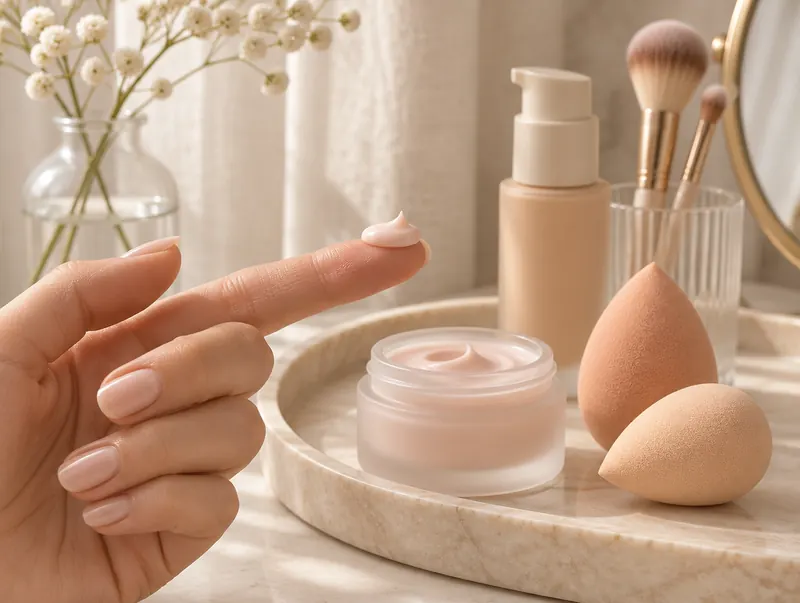
Apply only where the intended effect is useful
A localized shine preference may call for a small area of mattifying primer, not a full-face coat. Likewise, a radiance-focused product can create a different look when applied selectively rather than everywhere.
Use the stated amount as a guide and avoid assuming a thick layer gives more benefit. More product can create additional material to move, roll, or blend above.
Follow the directed sequence. Assess how the actual formula behaves.
Avoid simple compatibility myths
Finished cosmetics contain multiple ingredients and structures. Calling one product water-based and another silicone-based does not by itself predict whether the complete combination will apply well.
If a pairing pills, reduce excessive layers, check directions, and compare one change. Do not assume the first listed ingredient reveals the whole reason for the result.
Using the same brand can be convenient when products are designed together, but it is not proof that every combination works for everyone. Equally, mixed brands are not automatically incompatible. Observe the actual routine rather than relying on a blanket rule.
Choose a realistic place for the comparison
Try the primer during an ordinary routine before relying on it for an important occasion. Keep the rest of the makeup familiar and allow enough time to observe the result without rushed corrections. If a product only works with a preparation sequence you dislike or cannot repeat, include that inconvenience in your decision. A small visual benefit may not justify a substantially more demanding routine.
Decide from the benefit, not the category
Keep the primer when it delivers a defined effect you like without unacceptable extra effort or discomfort. Use it only in selected areas if that gives a better balance. Leave it out when the difference is too small to matter to you.
Do not continue using an irritating product because it seems to improve foundation grip. Comfort and appropriate care remain more important than completing an optional cosmetic step.
For your next comparison, keep notes short: less shine beside the nose, more visible sheen on cheeks, or no meaningful difference. Those concrete observations give you a reason to keep, change, or skip the product without turning a simple foundation routine into an endless search for another layer.
Frequently asked questions
Is primer the same as moisturizer?
No. A primer’s intended cosmetic role differs from skin care, even if its marketing mentions hydration. Keep the care and sun protection your skin needs rather than replacing them automatically.
Must primer and foundation be the same brand?
Not necessarily. Brand matching alone does not establish compatibility. Follow the products’ directions and assess the actual combination in a controlled ordinary-day trial.
Does silicone always conflict with water-based foundation?
A simple ingredient-category rule does not reliably describe every finished formula. Product amount, settling, movement, and the complete formulation matter; compare the actual products rather than one label.
Can primer permanently shrink pores?
Do not expect a primer to permanently change skin structure. A cosmetic smoothing effect concerns appearance while the product is worn, not treatment or a lasting physical change.