The 5 Makeup Brushes You Actually Need
Build a practical five-brush starter kit around base, cheeks, eye color, blending, and brows, with sensible swaps for the makeup steps you actually use.
Start with five useful task slots: foundation, powder or cheeks, eye-shadow placement, eye blending, and brows. Choose one manageable tool for each, then swap out any role your makeup routine does not include. Five is a compact starting plan, not a rule about how many brushes every person must own.
The aim is to avoid both gaps and duplication. One comfortable brush that you use repeatedly is worth more to your routine than several unfamiliar heads bought only to complete a set.
The five-slot plan
| Slot | Suggested shape | Main job | Useful adjustment |
|---|---|---|---|
| 1 | Medium foundation brush | Thin base placement | Skip if another base method suits you |
| 2 | Medium soft cheek or powder brush | Selected powder or cheek color | Separate colors if residue interferes |
| 3 | Small flat eye shader | Controlled eye-shadow placement | Swap for concealer if you skip shadow |
| 4 | Tapered eye blender | Softening shadow edges | Choose a smaller head for limited space |
| 5 | Angled brow brush with spoolie | Brow color plus gentle combing | Use a plain spoolie if no added color is needed |
A dual-ended brow option keeps this example to five handles, although it provides two working ends. You can choose separate tools instead if that arrangement is easier to clean and store.
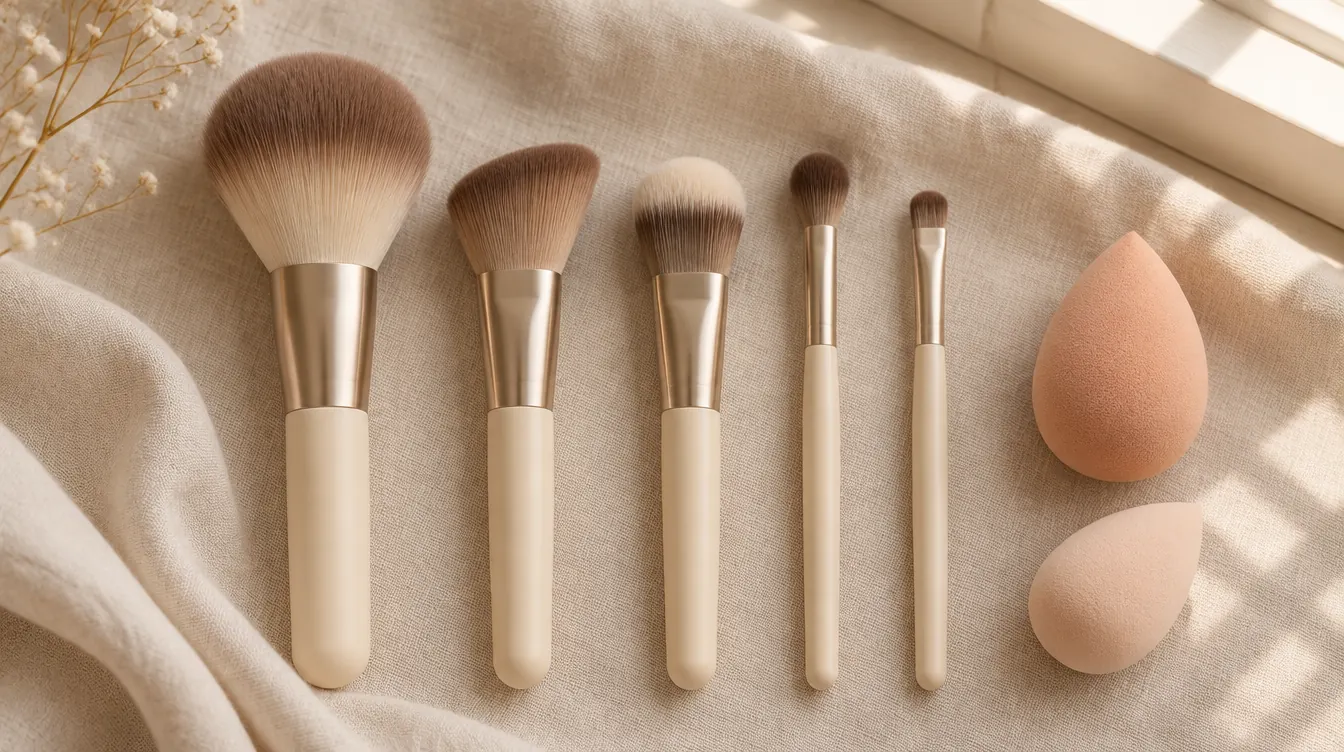
Slot 1: a foundation brush you can control
Choose a manageable head suitable for your usual liquid or cream formula. A dense rounded or flat-topped head can offer deliberate placement; a flat paddle may suit thin spreading. You do not need both just to begin.
Start with a small product amount and short gentle movements. A brush that requires hard rubbing to move your foundation may be a poor match for that formula or loading method.
If clean fingers or a sponge already give the finish you like, keep that approach. Free the brush slot for something else rather than buying a base brush because a numbered list seems incomplete.
Slot 2: a medium brush for a defined cheek or powder job
A medium soft head is easier to place selectively than a very large fluffy brush. Decide its main job before use: setting selected areas, powder blush, or bronzer.
One brush can serve different products across cleaned sessions, but a loaded bronzer brush is not automatically ready for pale setting powder. Residue can change the next deposit even when the bristles look only lightly colored.
If you use several cheek colors every day, a separate tool may be a useful sixth item. The five-slot plan should reduce unnecessary buying, not force constant color mixing to protect an arbitrary number.
Slot 3: a small flat eye shader
A flat shader helps place eye color on a limited area with gentle presses or short strokes appropriate to the product. Choose a size that fits the region you actually want to cover.
A very broad shader may place color beyond your intended boundary. An extremely tiny one can make a simple lid application unnecessarily slow. The useful size is the one you can position without stretching or awkward reaching.
Use eye-intended cosmetics and keep tools clean. Avoid working on an inflamed or infected eye, and stop for irritation. If you do not wear shadow, a small concealer brush may be the more relevant slot.
Slot 4: a tapered blending brush
This role softens an eye-shadow boundary after placement. Start with a lightly loaded or unloaded appropriate brush rather than using a dark, saturated shader to do all the blending.
Use small gentle movements and inspect the edge. Endless large circles can spread color well beyond the intended region instead of refining it.
A small tapered head can be useful when your available space is limited. Do not assume the largest fluffy eye brush provides the softest practical result; size and control need to work together.
Slot 5: an angled brow brush and spoolie
A narrow angled head places short color strokes. A spoolie combs hairs and helps distribute a deposit that looks concentrated. Together they cover adding and refining rather than simply painting a solid shape.
If your brow pencil already includes a useful spoolie, you may not need another. Check what is in your routine before counting a dual-ended tool as a missing purchase.
The eyebrow brush guide explains how to evaluate edge thickness, bristle flexibility, and comfortable combing rather than choosing solely by the handle’s appearance.
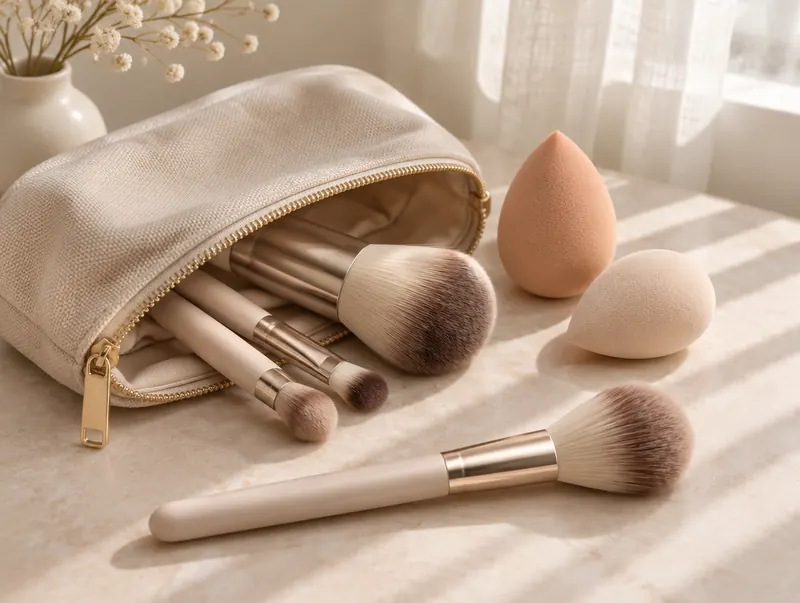
Adapt the kit to your actual routine
For a base-and-lips routine, eye shader and blender slots may be unnecessary. A small concealer brush and lip brush may provide more value. Keep the tools personal and separate used lip tools from eye work.
For a powder-only complexion routine, a foundation brush designed mainly for liquids may add little. Choose an appropriate powder tool instead and avoid purchasing a second nearly identical shape without a purpose.
For frequent cream blush and bronzer, separate color surfaces can simplify application. Your kit may need two suitable cheek tools rather than a large powder brush that rarely leaves the drawer.
Audit before you buy
- Write down the makeup steps you repeat in an ordinary week.
- Match each existing clean tool to a task it performs comfortably.
- Identify a recurring gap rather than a missing brush name.
- Choose one shape that fills that gap.
- Verify materials, intended formulas, and care directions.
- Add another tool only after the new one has a clear routine role.
The broader makeup brush guide helps identify unfamiliar shapes you already own. You may discover that a brush labeled contour handles your preferred cheek application well without needing a new blush label.
Compare singles and sets fairly
Count the useful roles rather than the number of pieces. A set with four similar powder heads may cover fewer of your needs than several carefully chosen singles.
Do not assign full value to a case you will not use or to duplicate heads you cannot comfortably clean and store. Conversely, a useful spare can be practical when another brush is drying.
Check the current price when comparing options, including pack contents and any relevant delivery cost. Avoid assuming a sale automatically makes a large collection a sensible starting purchase.
Make the compact kit easy to maintain
Keep clean and used tools distinguishable, wash according to suitable care guidance, and dry thoroughly before enclosed storage. A five-brush kit still needs upkeep; owning fewer tools does not remove that work.
Our home and travel storage guide helps arrange a small kit without crushing the heads or putting damp tools away. Choose tools whose care routine fits your time and space.
If one slot consistently goes unused, remove it from the plan. A practical kit evolves with the makeup you wear, and there is no advantage in maintaining five simply because that was the starting example.
Frequently asked questions
Does a dual-ended brow tool count as one brush?
Here it counts as one handle in the five-piece plan, although it has an angled head and a spoolie end. Check storage and cleaning access for both ends before choosing it.
What if I already apply foundation with fingers?
Skip the foundation brush unless you want to change that method. Use the slot for a separate cheek tool, concealer brush, or another task you genuinely repeat.
Is five the minimum for everyone?
No. Some routines need fewer and some need a specialist extra. Five is a practical example of covering several common tasks without treating a large matching set as necessary.
Should I buy all five together?
Only if every shape is useful and the total makes sense. Buying the missing task one at a time can be clearer than purchasing a set that duplicates tools you already like.