Synthetic vs Natural Makeup Brushes
Compare synthetic and natural makeup brushes by materials, formula use, care, and personal priorities without assuming either label guarantees performance.
Choose between synthetic and natural makeup brushes by the exact tool’s job, materials, and care directions. Synthetic bristles are manufactured fibers; natural-hair brushes use animal hair, sometimes combined with other fibers. Neither label alone establishes softness, blending quality, useful life, or hygiene.
Start with your formulas and personal priorities. A brush you can use comfortably and maintain appropriately is more useful than a category chosen on the assumption that every tool within it behaves the same way.
Understand the material descriptions
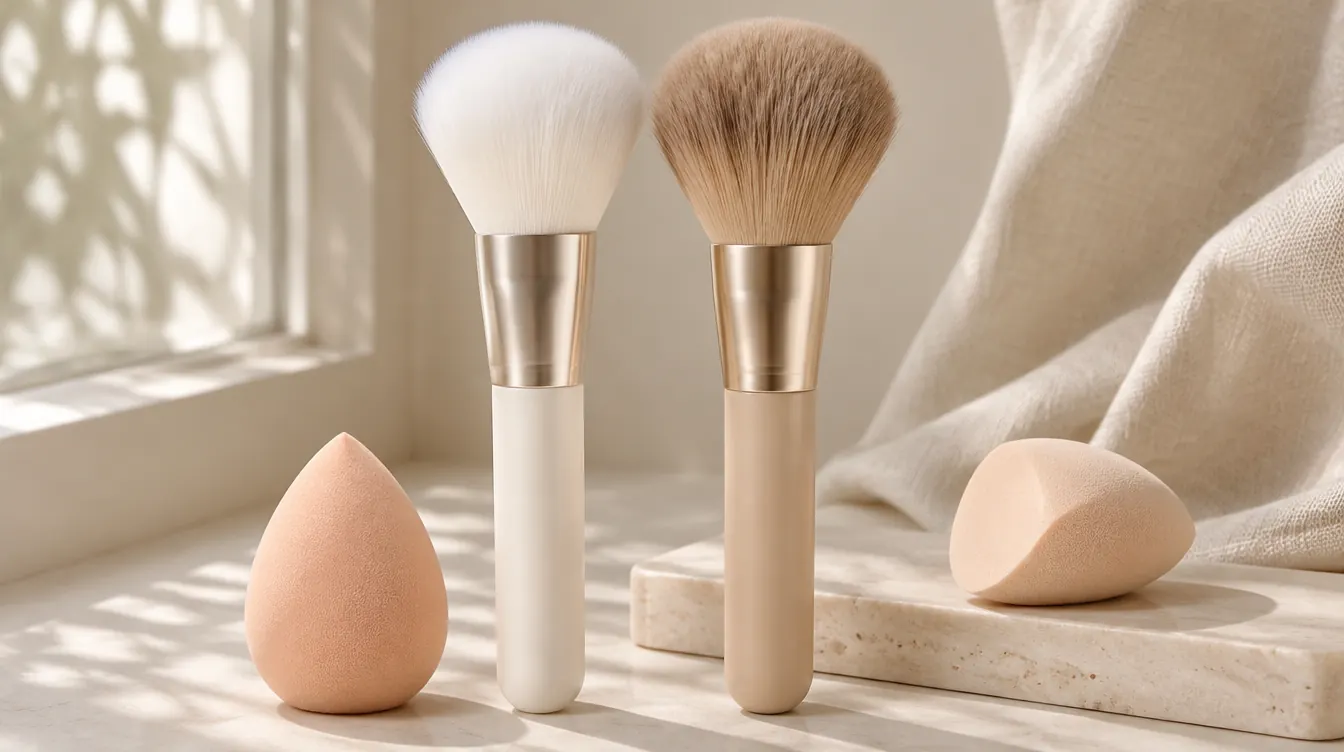
Synthetic is a broad category of manufactured bristles, not one identical fiber. Makers can vary dimensions, tips, texture, and the arrangement of fibers in the head. A sleek flat foundation brush and a fluffy powder brush can both be synthetic.
Natural hair is also varied. Hakuhodo’s materials guide distinguishes several animal-hair types and describes blends as well as synthetic fibers. That is a useful reminder that natural is not a single uniform brush construction.
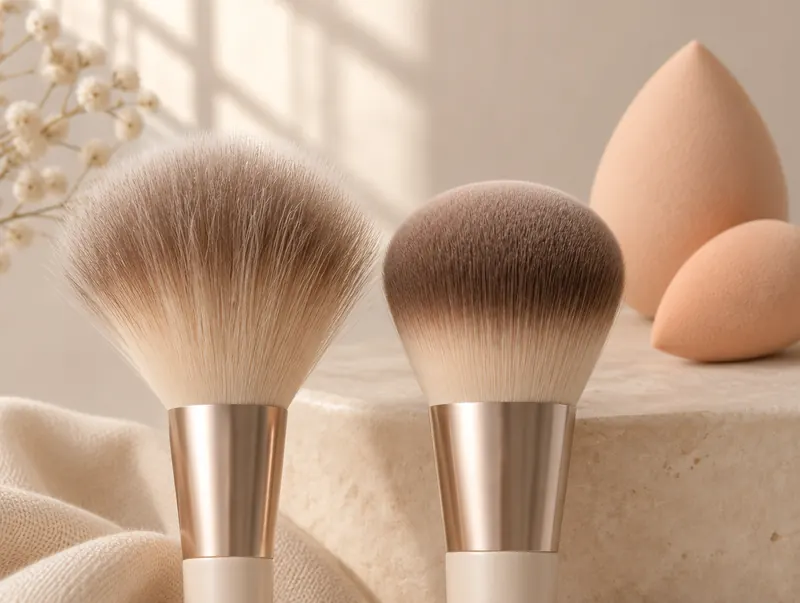
Read mixed-material labels carefully. Duo fiber may describe a particular arrangement or blend, but the phrase alone does not tell you every component. Look for explicit information rather than guessing from two-tone bristles.
Compare the practical questions
| Question | Synthetic category | Natural-hair category |
|---|---|---|
| Material origin | Manufactured fibers | Animal hair or a stated blend |
| Suitable formulas | Depends on exact design | Depends on hair and maker guidance |
| Powder use | Available in powder-focused designs | Available in many powder-focused designs |
| Cream or liquid use | Common, but check directions | Do not assume every hair type permits it |
| Care needs | Follow finished-tool instructions | Follow hair-specific and finished-tool instructions |
| Ethical claims | Verify finished-product scope | Verify sourcing and any stated policy |
Application pressure and product amount can make a bigger practical difference than the broad material category.
Choose by formula before repeating old rules
Synthetic brushes are commonly offered for liquid and cream placement, but that does not make them unsuitable for powder. Current manufacturer ranges include synthetic eye blenders, powder brushes, and cheek brushes as well as foundation tools.
Natural-hair brushes may have particular formula restrictions. Some delicate designs are intended for powder rather than oily or creamy products. Follow the exact maker’s guidance instead of treating every animal-hair brush as interchangeable.
Do not use a product outside the tool’s intended care and use simply to complete a comparison. A brush that cannot support the makeup you wear most often is not the right candidate, regardless of its reputation.
Keep shape and density in the comparison
A dense flat-topped synthetic brush and a loose natural-hair dome differ in several ways at once. If one places more product, fiber alone may not explain the result.
Compare similar roles and head sizes when possible. Consider the contact patch, flexibility, and amount of product loaded before attributing every difference to natural versus synthetic.
The brush shape guide explains those variables. For base application specifically, foundation brush types separates paddle, rounded, flat-top, and other common designs.
Assess pickup and release without inventing percentages
A brush can hold makeup between bristles as well as on their surfaces. The visible residue does not directly measure how much product was wasted or how much reached your skin.
Use small portions during a personal comparison. Note whether you can place the amount you want with manageable effort, rather than trying to prove that one category absorbs a fixed percentage less.
Manufacturer performance claims need their own evidence and conditions. Do not transfer a claim about one patented design to all synthetic or natural tools.
Make comfort an observable requirement
The head should make gentle contact without scratching or requiring force. A brush that feels prickly in your normal application does not become suitable simply because its material is described as luxurious.
Likewise, soft-looking bristles can feel uncomfortable when packed into a firm head or pressed hard. Loosen your grip and use the appropriate motion before deciding whether the tool suits you.
Stop for irritation and avoid applying over broken or inflamed skin. Seek a dermatologist’s advice for persistent concerns. Natural, synthetic, vegan, and sensitive-skin descriptions are not personal allergy guarantees.
Read ethical and sourcing statements narrowly
If avoiding animal-derived materials is essential, look for a clear vegan claim for the finished tool. If sourcing or animal-testing policies matter, read the named policy and any certification’s scope separately.
A synthetic fiber description does not automatically explain glue, coatings, or every component. A natural-hair label does not by itself explain how the hair was obtained. Missing details should remain unresolved rather than filled with assumptions.
Price is not evidence of ethical sourcing. Neither a premium presentation nor a very low price settles those questions. Choose a maker whose information answers the requirements you actually have.
Include care in the buying decision
Read the cleaning method before purchase. Some designs require gentler handling or specific cleanser restrictions. If their care needs do not fit your routine, choose another tool rather than planning to keep using it dirty.
Clean personal tools remain necessary in both categories. A synthetic brush is not self-cleaning, and natural hair does not justify ignoring hygiene. Use appropriate care guidance and contact the manufacturer if its instructions conflict with the cleaning routine you need.
The brush cleaning guide covers the practical process separately. Material selection should simplify that routine, not encourage you to avoid washing a frequently used tool indefinitely.
Account for how often you change formulas
If you regularly move between powder and cream products, choose tools explicitly suited to that pattern and plan cleaning between incompatible residues. A head that works well for one powder shade may not be ready for a pale cream merely because its fibers are synthetic. Keep distinct working roles where that makes application easier, rather than relying on material category to prevent color transfer or buildup.
Compare candidates in six steps
- Name the makeup task and formulas you use most often.
- Confirm each candidate is intended for those formulas.
- Compare similar head roles and manageable sizes.
- Verify material and any ethical claims separately.
- Read the finished-tool cleaning and drying directions.
- Buy one useful candidate before expanding into a collection.
Do not replace a comfortable appropriate brush merely to switch categories. If you already have a tool that serves the job, continue suitable care and replace when its condition or instructions require it.
A useful final choice is specific: a brush for powder blush with a manageable head and clear care directions. That gives you more practical information than declaring all synthetic or all natural brushes best.
Frequently asked questions
Does synthetic automatically mean vegan?
Synthetic bristles identify the fiber type, but a vegan claim concerns the relevant finished product and its components. Verify the maker’s exact claim rather than inferring everything from one material word.
Are natural brushes always softer?
No. Hair type, selection, shape, density, and condition all affect feel, and synthetic designs also vary. Neither category guarantees comfort on your skin.
Can synthetic brushes apply powder?
Yes, when designed for that purpose. Do not treat synthetic as a liquid-only category; check the exact brush description and the amount it places with your formula.
Is natural hair always cruelty-free?
Do not infer sourcing or testing practices from the material label. Read the maker’s specific information and the scope of any claim or certification that matters to you.