Best Makeup Sponges by Budget: A Practical Guide
Compare affordable and premium makeup sponge options, understand useful shape differences, and choose a budget that includes regular replacement costs.
The best makeup sponge for your budget is a clearly labeled tool with a useful shape and a replacement cost you can manage. For an affordable starting point, compare the e.l.f. Total Face Sponge and Real Techniques Miracle Complexion Sponge. Consider the Original Beautyblender if you prefer its rounded design and accept a higher purchase cost.
The recommendations explain who might prefer each design; they do not promise superior results on every face.
Choose a buying band
| Planning band | Candidate | Reason to compare it | Check before paying |
|---|---|---|---|
| Under $10 | e.l.f. Total Face Sponge | Angled and rounded working surfaces | Exact item and current price |
| Under $10 for a single; some sets cost more | Real Techniques Miracle Complexion Sponge | Flat edge alongside curved surfaces | Pack contents and care guidance |
| $15–$25 | Original Beautyblender | Rounded teardrop design | Current single-tool price and seller |
| $10–$25 for a bundle | Small practical set | A clean spare while another dries | Number of genuinely useful tools |
Retailer promotions, bundles, and package changes can move an option outside a band. Check the current price and compare the same pack size.
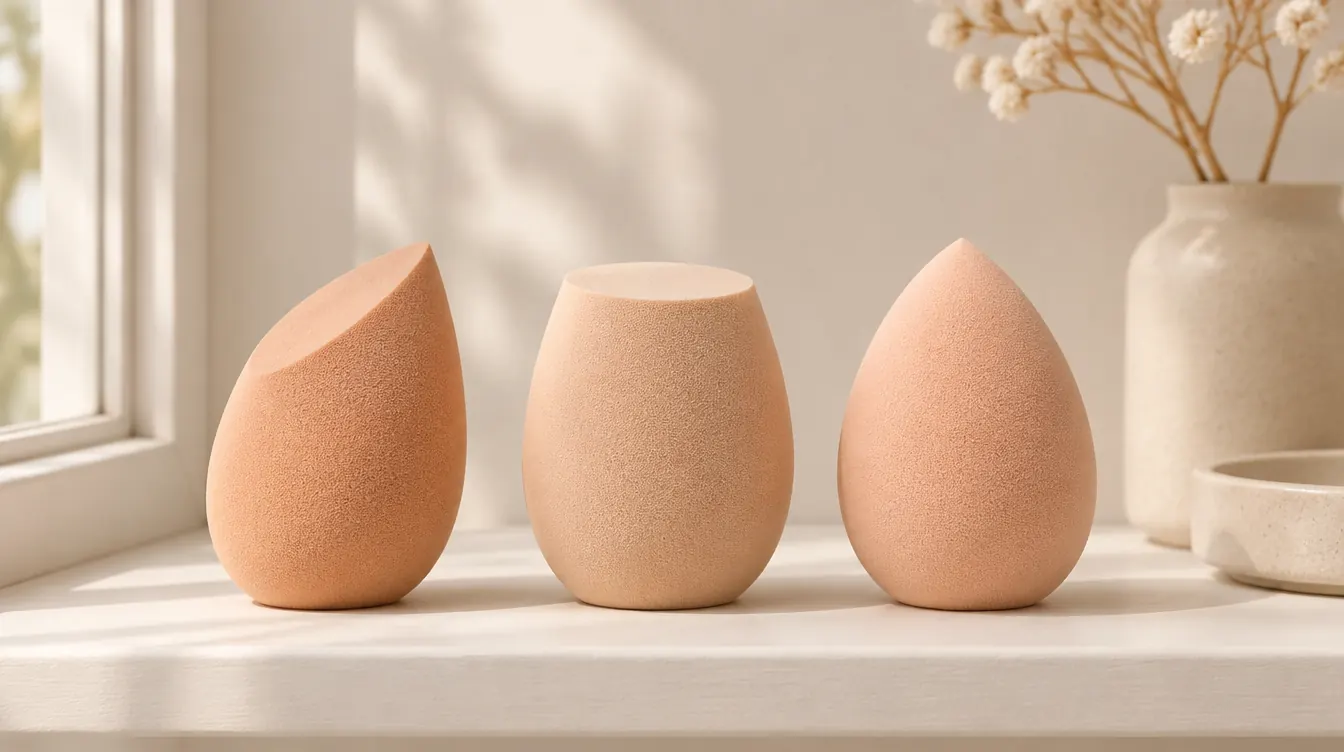
Affordable angled option: e.l.f. Total Face Sponge
The manufacturer describes latex-free foam, angled sides, and wet or dry use. That makes it a candidate if you want several working surfaces in one tool. The geometry offers a way to explore broad blending and more deliberate placement without buying several separate shapes.
The buying case is versatility, not a claim that this duplicates a premium sponge’s feel. A flat section may suit an edge; a curved area may feel easier on your cheek. Which you prefer depends on grip and motion.
Start with the single if you are still learning. A kit may include accessories that add little to a simple foundation routine. If you specifically dislike flat application faces, the low price alone does not make this the right shape.
Affordable flat-cut option: Real Techniques Miracle Complexion Sponge
This is worth comparing if you want a clear distinction between a broad flat edge and curved blending surfaces. Its product information describes damp use with liquid and cream makeup and identifies the foam as latex-free.
The flat section may appeal if you like placing product along a boundary before softening it.
Read its maintenance directions before buying a set. The current product page specifies replacement every 30 days. A low first-purchase cost is less informative if your budget assumes indefinite reuse.
A small pack may be practical when you want one clean spare. Count the tools you will use and do not compare a multipack’s total with another brand’s single without accounting for its contents.
Premium rounded option: Original Beautyblender
The Original Beautyblender is a candidate if you prefer a rounded teardrop without a cut-flat application face. The manufacturer directs wetting, squeezing, and bouncing it. Its broad body and narrower tip provide different contact sizes.
A premium price does not establish that you will use less foundation, get longer wear, or avoid all texture issues. Formula, product amount, and technique influence those outcomes. Buy for the design and your preferences rather than a promised transformation.
For the narrower question of paying more, read the original-versus-alternatives comparison. This is an independent guide site; it does not sell tools or represent the brand.
Features worth checking in any band
Clear materials
An item listing should identify the exact tool and explain use and care. If you have a latex allergy, explicit latex-free labeling matters more than language about softness or suitability for sensitive skin.
Vegan and latex-free describe different things. Neither proves the other. If either claim matters to you, verify it for the specific item instead of relying entirely on a retailer’s category filter.
A shape you can hold
Look for a broad surface for foundation and a smaller section for detail. You do not need a dedicated shape for every part of your face. A sponge you can rotate comfortably may be more useful than several unusual forms.
The sponge shapes guide translates product geometry into application jobs. Use the shape to solve an actual handling problem instead of treating a large collection as a requirement.
Care you can maintain
Sponges are consumable tools, including premium ones. Follow the exact maker’s replacement instructions and replace earlier when condition requires it. Stretching a damaged tool’s use is not a useful way to improve value.
Include cleaning supplies and a place to air-dry it in your budget. An expensive case does little for you if it encourages sealing damp foam inside. A simple clean drying spot may be the more practical purchase decision.
Compare value without inventing savings
Use the total you actually expect to pay, including relevant shipping. Divide a pack’s cost by the number of tools you genuinely want. Keep mini detail tools separate when your main need is full-face foundation application.
A bundle with one full-size sponge and several accessories is not equivalent to a pack of full-size sponges. Treat unused extras as extras, rather than assigning every item equal value to justify the purchase.
You can compare cost per useful tool from package information. You cannot reliably calculate foundation savings without appropriate measurements. Be cautious about claims that a sponge pays for itself through lower makeup use when no comparable evidence is provided.
Buy your first sponge in five steps
- Set a total budget that includes future replacement.
- Choose a rounded base, flat face, or combination based on your preferred grip.
- Compare one clearly labeled affordable option with one relevant alternative.
- Verify the current price, seller, contents, and maintenance instructions.
- Buy a single or small usable set and learn its technique before expanding.
Keep a note of the first-use date and the instructions. That gives you a concrete maintenance reference instead of relying on memory.

Avoid paying for the wrong solution
A huge low-cost assortment is poor value if materials are unclear or most shapes go unused. A premium gift set can also be poor value if your actual need is one clean replacement.
If every sponge creates patchiness, investigate technique before buying another. Excess water, overloading, and repeated hard pressing can affect tools in every price band. Start with the beginner application routine.
Choose a transparent listing and assess what you would change about handling or maintenance after using the tool as directed. That gives your next purchase a purpose instead of assuming a higher price must improve the finish.
Frequently asked questions
Is a multipack always cheaper?
No. Compare the total with the number of useful sponges it contains. Unneeded shapes and accessories can make a larger set poor value even when the item count looks generous.
Should beginners buy a premium sponge first?
One clearly labeled affordable sponge is usually enough to learn the technique. Consider paying more after identifying a specific handling feature you want to change.
Should I stockpile discounted sponges?
Only if you expect to use them and can store unopened tools clean and dry. A lower unit cost does not help when you buy far more than your routine needs.
Can an inexpensive sponge be latex-free?
Yes. Latex-free options exist at different price levels. Verify the exact product and packaging rather than treating its cost or color as evidence of its material.