Original Beautyblender vs Dupes: Is It Worth It?
Compare the Original Beautyblender with affordable alternatives by shape, care, handling, and replacement cost to decide whether paying more suits you.
The Original Beautyblender can be worth paying more for if you prefer its rounded shape and how it handles your makeup. It is not a necessary purchase for an even foundation layer. A clearly labeled affordable alternative may meet your needs without matching every aspect of the original.
Decide what you mean by a dupe
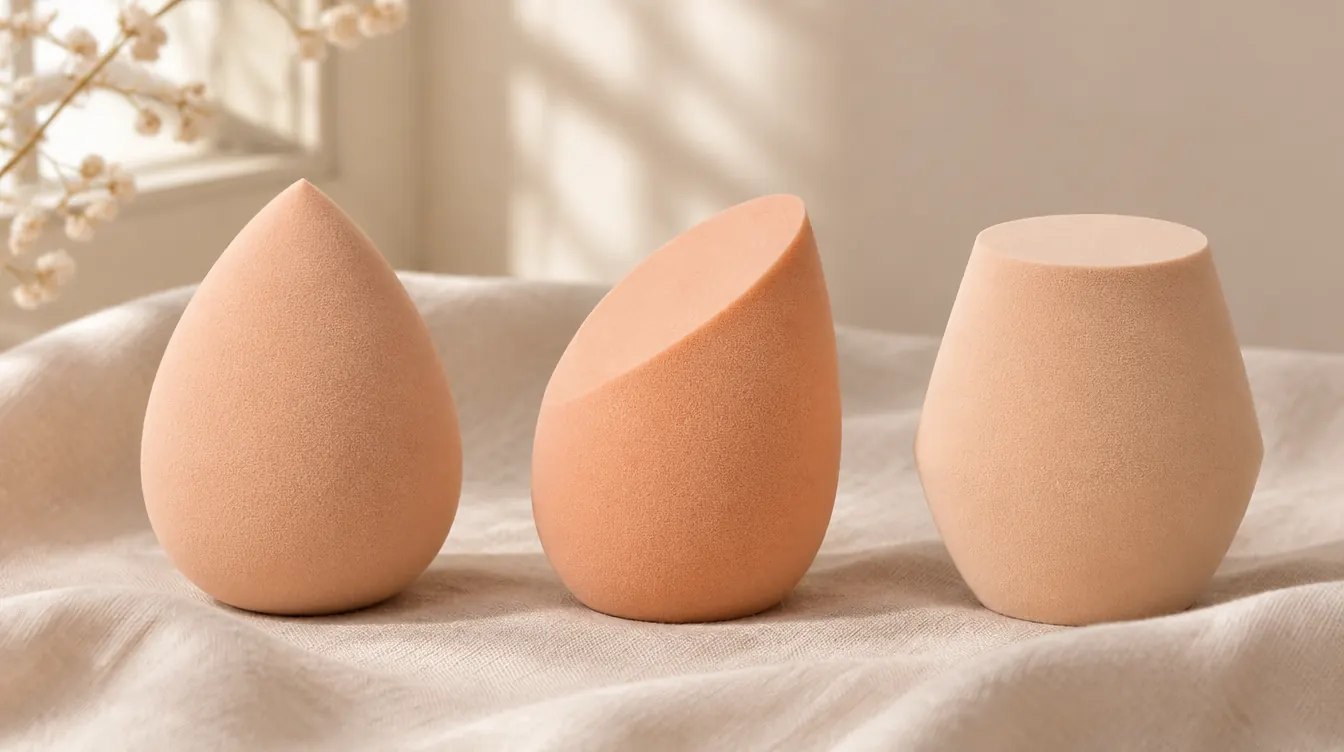
In beauty conversations, a dupe usually means a less expensive product intended for a similar job. It does not necessarily mean the same material, construction, or user experience. Two egg-shaped tools can differ in ways a photograph does not show.
A legitimate alternative has its own product name and labeling. A counterfeit pretends to be a product from another brand. Do not use those categories interchangeably when evaluating a seller or comparing prices.
The e.l.f. Total Face Sponge and Real Techniques Miracle Complexion Sponge are named alternatives with their own identities. Calling them alternatives is more precise than assuming they reproduce the original’s exact feel.
Compare documented features first
| Decision | Original Beautyblender | Affordable alternatives |
|---|---|---|
| Main shape | Rounded teardrop with narrower tip | Varies; may include flat or angled faces |
| Application directions | Wet, squeeze, and bounce | Read exact product directions |
| Buying band | Often considered in $15–$25 planning band | Many singles fit under $10 |
| Replacement | Follow current product guidance | Follow each maker’s guidance |
| Main buying question | Do you prefer this design enough to pay more? | Does this exact tool solve your application need? |
Check the current price before buying. Compare a single with a single before deciding how large the price difference is.
What the Original’s shape may offer you
The Original Beautyblender has a rounded body rather than a cut-flat working face. That can appeal if you like rotating continuously around a curved surface as you blend. The narrower end offers a smaller contact area for detail.
If you prefer placing makeup with a flat face, paying more for an entirely curved design may move away from the feature you actually want.
Think about your grip. Do you naturally hold a sponge near its middle and roll it slightly between sections? Or do you repeatedly search for a flat area to press along a boundary? Your answer makes the comparison more concrete.
What affordable alternatives may offer you
The e.l.f. Total Face Sponge is described with angled sides and latex-free foam. It is worth considering if multiple contact surfaces in one tool suit your routine. That geometry is a reason to compare it, rather than proof it will feel the same as another sponge.
The Real Techniques Miracle Complexion Sponge combines a flat edge, rounded areas, and a precision tip. Its manufacturer describes damp use with liquid and cream makeup. It may appeal if you want to assign different parts of the sponge to different application jobs.
Neither option needs to be identical to the Original to offer useful value. A different shape may actually be the reason you prefer it. For broader price planning, see makeup sponges by budget.
Separate value from performance promises
A higher price is an observable purchase difference. Better blending, lower product waste, and longer useful life require more evidence than a price tag. Do not assume one proves the others.
It tells you what you pay for the exact item, not how comfortably it will work with your foundation.
Avoid vague comparisons such as half the quality or twice the performance when no defined measurement exists. Ask a narrower question: does the shape help me place product around my nose, or does this sponge require more maintenance than I can realistically manage?
Compare upkeep before calculating savings
Every reusable sponge needs appropriate cleaning and drying. Premium foam is not exempt from damage or poor storage, and cheap foam should not stay in use after it becomes questionable just to stretch value.
Replacement guidance differs. Use the instructions for the actual item, rather than transferring one brand’s interval to every alternative. Our sponge lifespan guide explains how condition and manufacturer guidance work together.
When considering a set, count the usable sponges and whether you need them. Accessories do not automatically increase value. One suitable single may be a better purchase than a bundle whose shapes never leave the drawer.
Make a useful comparison at replacement time
You can evaluate preferences without buying a large collection at once. Wait until a replacement is due, then select an alternative with one feature you specifically want to compare.
- Write down what you like and dislike about the current tool.
- Identify whether the issue is shape, grip, maintenance, or an application result.
- Choose a comparison tool that changes that feature rather than everything at once.
- Follow each tool’s instructions using your usual foundation.
- Note coverage, ease of reaching corners, cleanup, and comfort.
- Reassess after several normal applications without extending either tool beyond its care guidance.
Different formulas and moisture levels can still influence what you observe.
Check technique before blaming price
If both tools look patchy, the shared problem may be application. Excess water can release droplets into foundation. Overloading may create a heavy layer, while repeated pressing can lift coverage you wanted to keep.
Use the same basic motion with each tool only where its directions support it. The beginner sponge method is a useful baseline for reusable wet-use foam. Do not judge an entire brand from one attempt with a dripping or heavily loaded sponge.
If the tool feels rough or causes irritation, stop instead of persisting for the sake of a comparison. Latex allergy requires checking the specific material label. A recognizable brand name does not replace that check.
Choose the purchase that answers your actual need
Consider the Original when a rounded design is your preference and the cost fits comfortably into regular replacement. Consider an affordable alternative when its specific shape and instructions suit you. Keep your existing choice when it already works and replacement is not due.
Buy through a seller whose identity and exact product listing are clear. A very low price alone does not verify authenticity.
The useful outcome is a tool you can use comfortably, clean consistently, and replace appropriately. You do not need to defend either the premium or budget category once a particular sponge meets those needs.
Frequently asked questions
Does dupe mean counterfeit?
Not necessarily. In beauty discussions, dupe often means a less expensive alternative. A legitimate product sold under its own brand is different from an item pretending to be the original.
Will the Original use less foundation?
That cannot be guaranteed for your routine. Foam, moisture, loading, and blending all affect product use. Avoid treating a brand comparison as proof of a specific savings percentage.
Are all pink egg-shaped sponges equivalent?
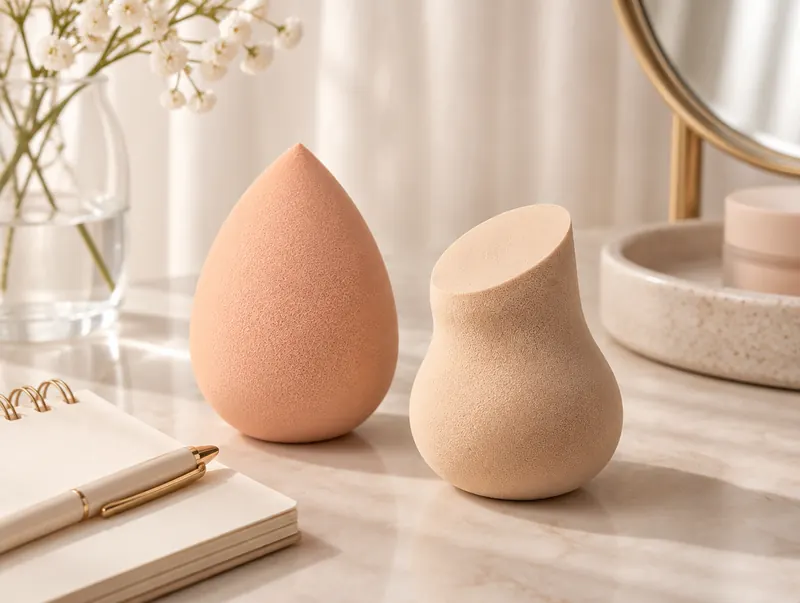
No. Similar color and outline do not establish identical foam, feel, materials, or care instructions. Compare the exact labeled product rather than its appearance alone.
Should I replace a working alternative just to upgrade?
There is little reason unless you want to solve a specific handling problem. Keep a suitable tool in use within its care guidance, and compare alternatives when replacement is actually due.