Latex-Free and Vegan Makeup Sponges
Learn what latex-free, vegan, and cruelty-free sponge labels mean, how to verify a specific tool, and which claims do not establish allergy suitability.
Choose a latex-free makeup sponge by checking the exact product’s material statement. Choose a vegan sponge by checking its separate animal-derived-materials claim.
If you have a known or suspected latex allergy, do not rely on color, shape, softness, or a vegan label. Obtain clear information about the actual item before using it.
Keep the common labels separate
| Label | What it addresses | What it does not establish |
|---|---|---|
| Latex-free | The stated absence of latex in the tool | No possible reaction to any substance |
| Vegan | Animal-derived materials under the claim’s scope | Latex-free construction |
| Cruelty-free | Animal-testing policy under the stated standard | No animal-derived materials |
| Plant-based | Some or all material origin, depending on wording | Vegan, compostable, or latex-free automatically |
| For sensitive skin | A marketing description | Personal allergy suitability |
Read a claim as narrowly as it is written. A statement about packaging does not describe the sponge, and a brand-wide policy may still require checking the particular product and market version.
Why latex and vegan claims can overlap without matching
Natural rubber latex is plant-derived. Avoiding animal-derived materials does not automatically remove plant-derived substances, including latex. That is why the two decisions need separate checks.
A sponge’s outline reveals little about its construction. A soft pink egg and a firm triangular wedge might use different materials, but their appearance cannot establish what those materials are.
Do not use smell, stretch, or a home rubbing experiment to identify latex. Such observations are not reliable material verification. If allergy is relevant, the practical next step is manufacturer clarification or choosing a clearly documented alternative.
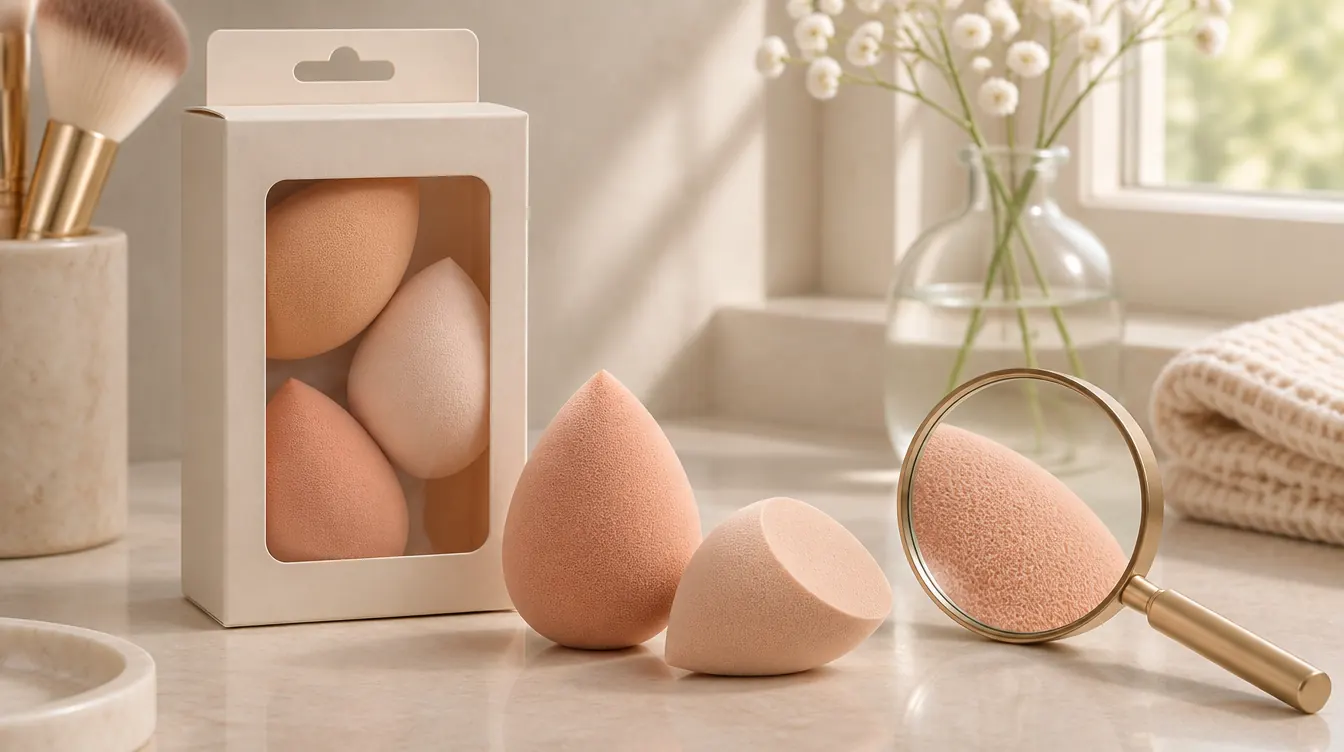
Verify the exact item in five steps
- Record the full product name and selected version, not only the brand.
- Read the packaging and current manufacturer product description.
- Find a direct latex-free statement if that feature is necessary.
- Check the vegan claim and any certification scope separately.
- Ask the manufacturer to clarify missing or conflicting information before using the tool.
Keep a screenshot or note of the relevant description for your own reference. That helps if a retailer sends a different item or the packaging does not match the listing.
Check again when replacing the sponge. Familiarity with an older purchase does not establish that a new version has identical materials. This matters especially when the seller groups several shapes or versions into one page.
Examples of documented options
The Real Techniques Miracle Complexion Sponge is described by its manufacturer as vegan and latex-free. Its full-size shape combines a flat edge, rounded sections, and a narrower tip, making it an option to compare if those surfaces suit your foundation routine.
The e.l.f. Total Face Sponge is described with latex-free foam, and the brand states that its products are vegan. The e.l.f. Camo Concealer Sponge also has a latex-free statement and a dual-pointed design for detailed blending.
Verify the packaging you receive. Do not assume every similarly named item from a marketplace seller is the same product.
Many affordable singles fall in an under $10 planning band, while premium tools may sit in a $15–$25 band. Check the current price, pack size, and seller.
What a certification can help you understand
A recognizable certification may provide defined criteria and a way to check whether a brand participates. Read what it covers instead of assuming every ethical or material question has been answered.
For a vegan claim, ask whether it applies to the finished tool, any coatings, and relevant components. For a cruelty-free claim, understand that a testing policy is a separate subject from whether an ingredient came from an animal.
A self-designed leaf or bunny icon is not automatically independent certification. Look for the named organization and its explanation. If the information remains unclear, describe the claim as unverified rather than filling gaps with assumptions.
Handle allergy questions differently from shopping preferences
An ethical preference can guide a purchase comparison, but a suspected allergy needs more caution than trying a new grip. Do not intentionally expose yourself to a tool that may contain your known allergen.
FDA guidance on latex in cosmetics advises checking information and contacting manufacturers when needed. For a sponge, obtain tool-specific material information rather than assuming it has the same ingredient-label format as foundation.
Stop using the product if it causes a reaction and contact a healthcare professional. Seek urgent help for breathing difficulty or severe swelling. A dermatologist or allergist can advise on suspected sensitivities; a sponge buying guide cannot identify your trigger.
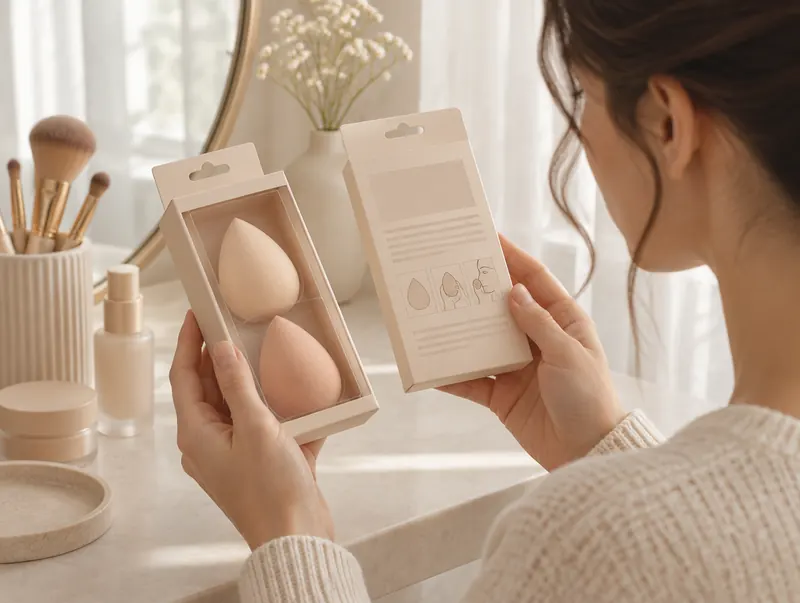
Remember the cleanser and makeup too
A latex-free tool does not change the contents of the products applied with it. Check foundation, primer, adhesive, and cleanser information separately when you have relevant sensitivities.
Residual cleanser can also affect comfort. Rinse according to the tool’s care instructions and avoid using strongly scented products to conceal an unusual sponge odor. Replacing questionable foam is more sensible than trying to mask a change.
For new cosmetic formulas, follow their patch-test directions where provided. That does not replace allergen avoidance or clinician guidance, and a small home test cannot prove a product will never cause a reaction.
Choose a useful shape after verifying the claims
Once the material and ethical requirements are clear, compare handling. A broad body suits foundation; a small tip or mini may be easier for detail work. The sponge shapes guide explains those differences without treating shape as material evidence.
Our mini concealer sponge guide helps if a small tool is your main need. A clearly documented full-size sponge may already have a narrow end that reaches comfortably, so a separate mini is optional.
If you are considering several tools, use the budget buying guide to compare useful contents rather than item count. Paying more does not automatically provide better labeling or personal tolerance.
Keep your final decision specific
A useful purchase note names the exact tool, its latex statement, and the vegan or cruelty-free information you verified. That is clearer than describing it simply as a clean or natural sponge.
Choose another documented option if the seller cannot clarify an important requirement. You do not need to test an uncertain product on your face to finish a comparison. Clear information, comfortable handling, and appropriate care provide a more practical basis for your routine.
Frequently asked questions
Does vegan mean latex-free?
No. Natural rubber latex comes from a plant, so a vegan claim alone does not exclude it. Look for a separate latex-free statement for the exact tool.
Is a latex-free sponge guaranteed not to cause a reaction?
No. Other materials, cleanser residue, cosmetics, or friction may still cause problems. Stop using an irritating tool and discuss persistent symptoms with a qualified clinician.
Can I check suspected latex by rubbing the sponge on my arm?
Do not intentionally expose yourself to a suspected allergen. If you have or suspect latex allergy, seek clinician guidance and verify materials with the manufacturer before use.
Does a cruelty-free logo cover vegan materials too?
Not automatically. Testing policies and material sourcing are different questions. Read the scope of the specific claim or certification rather than treating one logo as proof of both.