Deep Conditioning for Curls: A Practical Guide
Choose and use a deep conditioner for curls by following its timing, rinsing, and heat directions, then judge whether the extra step adds a useful result.
Deep condition curls by applying a suitable treatment as directed, allowing its stated contact time, and rinsing appropriately. Treat optional heat as a specific method to verify, not a requirement. Keep the extra step only if it offers a result you value beyond normal conditioning.
The phrase deep conditioner is not a promise that one product can reverse every kind of damage or change your curl pattern permanently. It describes a product category whose actual formula and instructions still need to be read.
Decide what you want the treatment to add
You may want a softer feel, easier handling, or a cosmetic result after a particular styling routine. Name that goal before buying another rich product.
If your ordinary conditioner already gives the manageability you prefer, a mask may be unnecessary. Adding one simply to complete a long routine can create more time and rinsing without a clear benefit.
Do not use a conditioning treatment as a substitute for medical advice about scalp irritation, unusual shedding, or painful changes. Those concerns are different from choosing a cosmetic finish.
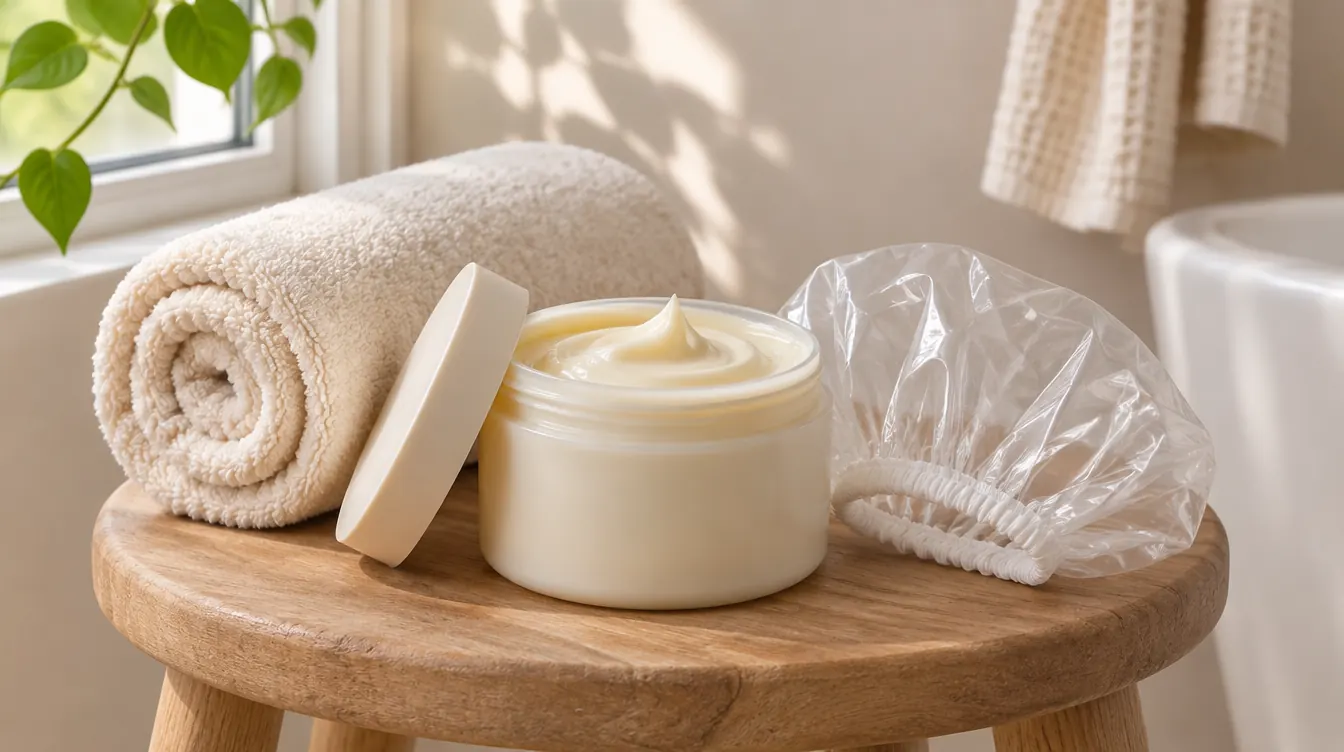
Compare normal and extra conditioning
| Decision | Regular rinse-out conditioner | Deep conditioner or mask |
|---|---|---|
| Main routine role | Familiar conditioning after or around cleansing | An optional additional or replacement treatment as directed |
| Timing | Follow the actual label | Follow the actual label, not a universal long wait |
| Rinsing | Usually required under instructions | Required unless the item explicitly says otherwise |
| Heat | Do not assume it is needed | Verify whether any heat method is permitted |
| Frequency | Depends on the routine and product | Depends on the routine and observed value |
A thick texture alone does not establish a stronger effect. Two products with similar names can have different intended uses, contact times, and compatibility with your routine.
Read the label before setting up
Check whether the product goes on clean wet hair, damp hair, or another specified state. Read the amount, distribution, contact time, and rinse instructions together.
Some masks describe a standard method and a separate optional heated method. Do not combine the longest time from one method with the conditions of another. The instructions need to remain a complete matched sequence.
If packaging and online directions conflict, ask the manufacturer which applies to your item rather than choosing the more intensive option by default.
Apply through manageable sections
Prepare your hair according to the treatment’s directions. Divide it into sections that let you distribute product rather than heavily coating only the outside.
Use a suitable amount. More product is not automatically more useful, particularly if it makes thorough rinsing difficult. Start with the directed application and observe what it actually does.
Avoid scratching the scalp with nails or forcing product into uncomfortable areas. A treatment intended mainly for lengths should not automatically be massaged over an irritated scalp.
Follow a controlled treatment sequence
- Read all directions and choose the appropriate method before beginning.
- Cleanse and prepare the hair as required by that method.
- Distribute the treatment through manageable sections.
- Detangle gently only if the product and method support it.
- Observe the stated contact time without inventing an extension.
- Rinse thoroughly unless the product explicitly directs otherwise.
- Continue with a familiar simple styling and drying routine.
The detangling guide covers gentle handling. A mask’s rich feel does not justify dragging a comb through resistance or repeatedly pulling the same knot.
Keep heat optional and directed
Use heat only when the treatment and device instructions support the particular method. A plastic cap, heated cap, hood dryer, and ordinary towel are not interchangeable devices with one shared temperature or timing rule.
Do not use an improvised heat source or uncomfortable temperature to make a product penetrate more. Follow device safety guidance and stop if the scalp feels uncomfortable.
If you prefer to avoid heat or cannot verify the method, use an appropriate nonheated option instead. You do not need to turn a cosmetic treatment into a more intense procedure for it to count.

Rinse according to the intended use
Leaving part of a rinse-out mask behind is not automatically equivalent to applying a formulated leave-in. Complete the rinse and assess the result after drying rather than using residue as proof of conditioning.
If the product is difficult to rinse, consider whether you applied much more than directed or missed dense inner sections. On the next use, adjust that practical issue instead of immediately adding another cleanser or treatment.
The leave-in versus curl cream guide helps separate the products used after washing. You may not need a generous dose of every finishing category after an already rich treatment.
Keep the rest of the comparison familiar
When trying a new mask, avoid changing your cleanser, detangling tool, and entire styling sequence on the same day. A different finished feel would then have several possible explanations. Keep ordinary steps stable where practical and record the treatment’s stated method. You can compare convenience and results on another normal wash day without presenting the observation as a controlled scientific test.
Judge the dried result, not only wet slip
Notice how easily hair handles during the method, but also assess it once your normal drying routine is complete. A pleasant wet feel and a finished result you like are related but distinct observations.
If hair feels coated or heavier than you prefer, reduce unnecessary layers or reassess the product. If it feels comfortable and manageable, there is no need to increase treatment time to chase an undefined deeper result.
Do not diagnose protein overload, porosity, or another condition from a single unusual wash day. Product amount, rinsing, styling, and handling can all affect what you see.
Choose a frequency from usefulness
Follow the product’s guidance and your actual routine rather than assuming all curls need a weekly intensive step. You can compare occasional use with your ordinary conditioner on separate familiar wash days.
Keep the cleanser, styling, and drying method as consistent as practical. That makes the treatment’s contribution easier to observe without pretending the comparison is a laboratory test.
Our beginner curly routine offers a simple baseline. Adding a treatment is worthwhile when it answers a defined need, not merely when a schedule has an empty slot.
Know what to change and when to stop
Record the treatment, approximate directed amount, chosen method, and the finished result. Change one variable next time if you want to compare convenience or feel.
Follow applicable patch-test instructions, avoid known allergens, and stop for irritation. Seek a dermatologist’s advice for persistent scalp concerns rather than escalating contact time or heat.
A useful deep-conditioning routine is comfortable, understandable, and easy enough to repeat. It does not require overnight improvisation, several overlapping masks, or a promise to repair every effect of past styling.
Frequently asked questions
Does deep conditioning repair every kind of damage?
No. A cosmetic conditioning result should not be treated as restoration of every structural change or a guarantee of healthy growth. Judge handling and appearance without expecting the product to reverse everything.
Is leaving a mask on overnight better?
Not unless the exact product is intended for overnight use. Longer contact is not automatically more effective, and a rinse-out timing instruction should not become an improvised all-night treatment.
Do all curls need a weekly mask?
No universal frequency applies. Consider what the treatment adds to your existing routine, the product’s directions, and how your hair feels afterward rather than following a fixed calendar for every pattern.
Must I use a heated cap?
No. Heat is optional only when both product and device directions permit the method. Do not improvise high temperatures or extend exposure to make the treatment seem deeper.