Leave-In Conditioner vs Curl Cream
Compare leave-in conditioner and curl cream by their intended roles, product directions, layering, and the amount your curls actually need after washing.
Choose a leave-in conditioner when your main goal is conditioning or easier handling after washing. Choose a curl cream when its stated styling role matches the result you want. You may use both if the directions support it and each adds something useful, but a two-product layer is optional.
The names overlap in practice. Some leave-ins have a creamy texture, and some curl creams include conditioning ingredients. The useful distinction comes from the actual label, application directions, and result rather than a rule that one must always be thin and the other thick.
Define the job before choosing the texture
Think about the repeated issue you want to change. Hair that feels difficult to handle after rinsing presents a different task from a style that lacks the amount of definition you prefer.
If your current routine already leaves hair comfortable and manageable, another conditioning layer may be unnecessary. If you want more hold, a cream described mainly for softness may not provide that specific effect.
Write the goal in ordinary terms: easier detangling, a softer feel, more grouped definition, or a particular finished shape. That makes the product comparison much clearer than buying every category mentioned in a tutorial.
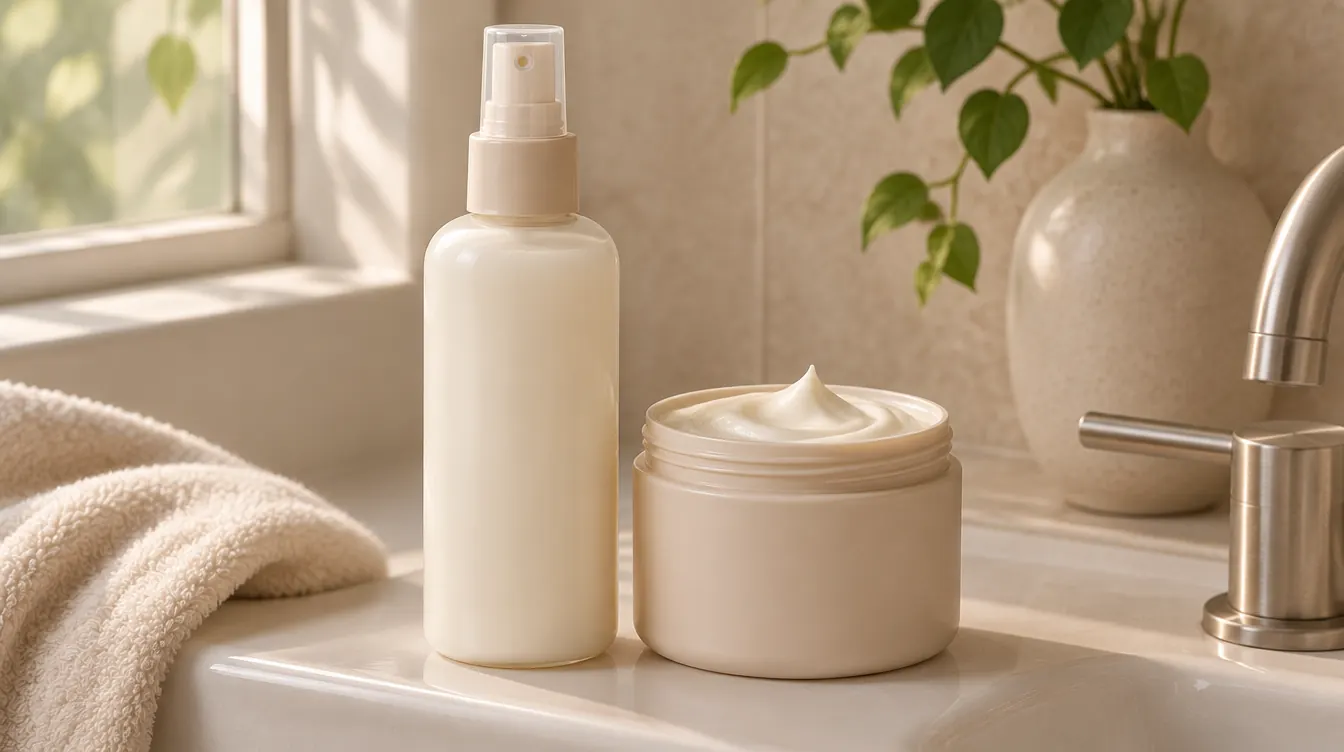
Compare their intended roles
| Question | Leave-in conditioner | Curl cream |
|---|---|---|
| Main starting role | Conditioning and handling as described | Styling effect as described |
| Texture | Spray, lotion, cream, or another format | Often creamy, with varied richness |
| Rinsing | Usually left in under its directions | Follow the exact product instructions |
| Hold | Do not assume strong hold | Varies; check the claim |
| Detangling | Some products specifically support it | Do not assume every cream is a detangler |
| Necessary alongside the other? | No universal requirement | No universal requirement |
A finished formula can combine several roles, which is why its own directions matter more than the broad name.
Read where and when the product goes
Check whether application is intended for wet, damp, or dry hair and whether the scalp should be avoided. Amount and distribution can affect the result just as much as the category.
For example, Ouidad describes Moisture Lock Leave-In Conditioner as a leave-in with detangling slip and directs application to wet or damp hair while avoiding the scalp.
Do not transfer that product’s directions to a different cream or bottle. Your own item’s packaging is the relevant starting point, especially if the formula or version changes.
Start with one useful layer
After your normal cleansing and rinse-out conditioning, use one optional product according to its directions. Distribute a modest amount through manageable sections rather than coating the visible outside heavily.
Complete your usual drying method before judging the overall result. A wet appearance does not tell you exactly how coated, defined, or voluminous the finished hair will feel.
If the single layer solves the problem, stop there. There is no need to add a second category to make the routine look complete.
Add a second product through a controlled sequence
- Keep the usual cleanser, conditioner, and drying method familiar.
- Name the remaining goal after the first product.
- Confirm both products’ intended application and any layering guidance.
- Apply a small appropriate amount in manageable sections.
- Finish drying without repeatedly adding more while you wait.
- Assess feel, definition, volume, and visible residue separately.
If the instructions indicate leave-in before styling cream, follow that sequence. Do not turn a common order into a universal rule that overrides a product’s own method.
Keep notes on amounts. A generous full dose of two similar products is a different comparison from a restrained layer of each.
Avoid letting more product become the default correction
Hair that feels coated after drying may need a smaller amount or fewer layers next time. Adding another rich cream to make the result feel different can make the cause harder to understand.
Visible flakes can have several explanations, including residue or the way a combination behaves. Do not automatically diagnose a scalp condition from a styling result or assume that one ingredient category is always responsible.
If a combination repeatedly produces a result you dislike, return to a simpler routine and compare one change. The beginner curly routine provides a clear baseline without requiring multiple styling layers.
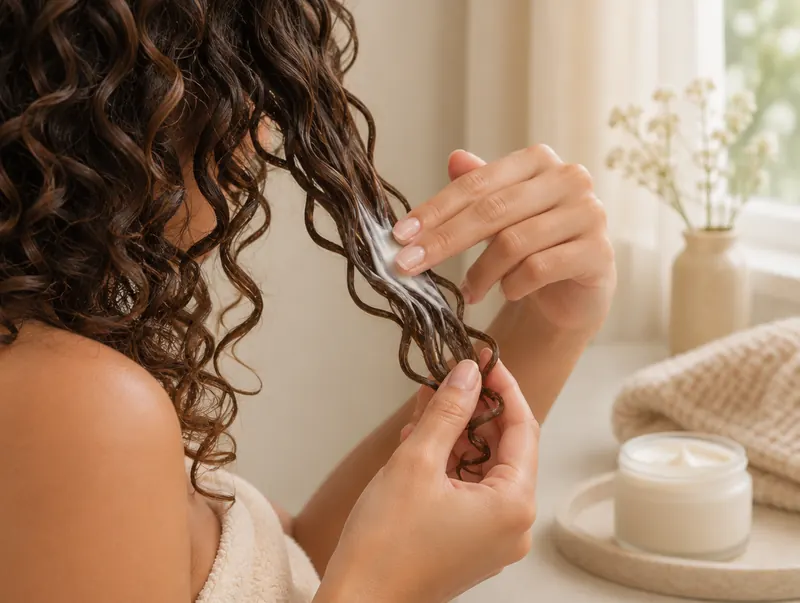
Check distribution before increasing the dose
If the outside feels coated while inner sections remain difficult to handle, inspect how you applied the product. A larger overall amount may repeat the same uneven distribution. Work in manageable sections and give the directed amount access to the intended lengths. You can then judge the formula more fairly than when most of it sits on the easiest-to-reach surface.
Keep detangling separate from styling promises
Use a product intended for the detangling method you choose. Gentle sectioning and gradual work through resistance matter even when a bottle promises slip.
A cream intended only as a finishing styler is not automatically appropriate for pulling a comb through a knot. The detangling guide explains how to keep that task controlled.
Leave-ins and styling creams do not replace the washing role merely because the hair feels softer afterward.
Consider how much hold you actually want
Definition and firm hold are different preferences. A cream may make curl groups easier to arrange without keeping them in exactly that position all day.
If your main goal is hold, read the finished product’s description and instructions for that role. Do not assume a thicker-feeling cream must provide more hold than a lighter product.
You can also prefer volume or a less structured shape. There is no requirement to add enough layers to make every strand sit in a uniform group.
Decide what to keep after ordinary use
Compare the products during a normal routine rather than introducing both before an important event. Record what each changes and whether the extra step is worth maintaining.
If you want to adjust a later day’s style, use the day-2 refresh guide rather than automatically reapplying every wash-day product. A small local adjustment may be enough.
Follow applicable patch-test directions for new products, avoid known allergens, and stop for irritation. Persistent scalp discomfort deserves a dermatologist’s advice. The right product choice is a comfortable repeatable cosmetic routine, not a claim to treat a scalp condition or permanently change your curl pattern.
Frequently asked questions
Can a leave-in conditioner be a cream?
Yes. Leave-in describes intended use rather than a guaranteed thin texture. A cream-based leave-in can still be a conditioner, so compare the label and function instead of the product’s appearance alone.
Does curl cream always provide hold?
No. Some focus on softness or definition with limited hold, while others combine functions. Check the exact description rather than assuming every cream replaces a gel or another hold product.
Should I use both products on every wash day?
Only if each has a useful role in your routine. Try one first, then add the other conservatively if a specific need remains instead of layering them automatically.
Can rinse-out conditioner become my leave-in?
Do not assume that. Use a product according to its intended directions, including rinsing when required. Leaving extra rinse-out conditioner in place is not automatically equivalent to using a formulated leave-in.