How to Refresh Day-2 Curls
Refresh day-2 curls selectively with light handling, appropriate water or product use, and decisions about when restyling should become a wash instead.
Refresh day-2 curls by adjusting only the sections whose appearance you want to change. Begin with light handling and a small directed amount of water or suitable product, then allow the section to dry before adding more. If the scalp needs cleansing or the hair feels coated, refreshing is not a substitute for a wash.
You do not need to recreate the first day’s style exactly. Some movement, softer definition, or more volume may suit your preference without requiring another full layer of every wash-day product.
Identify the task before reaching for spray
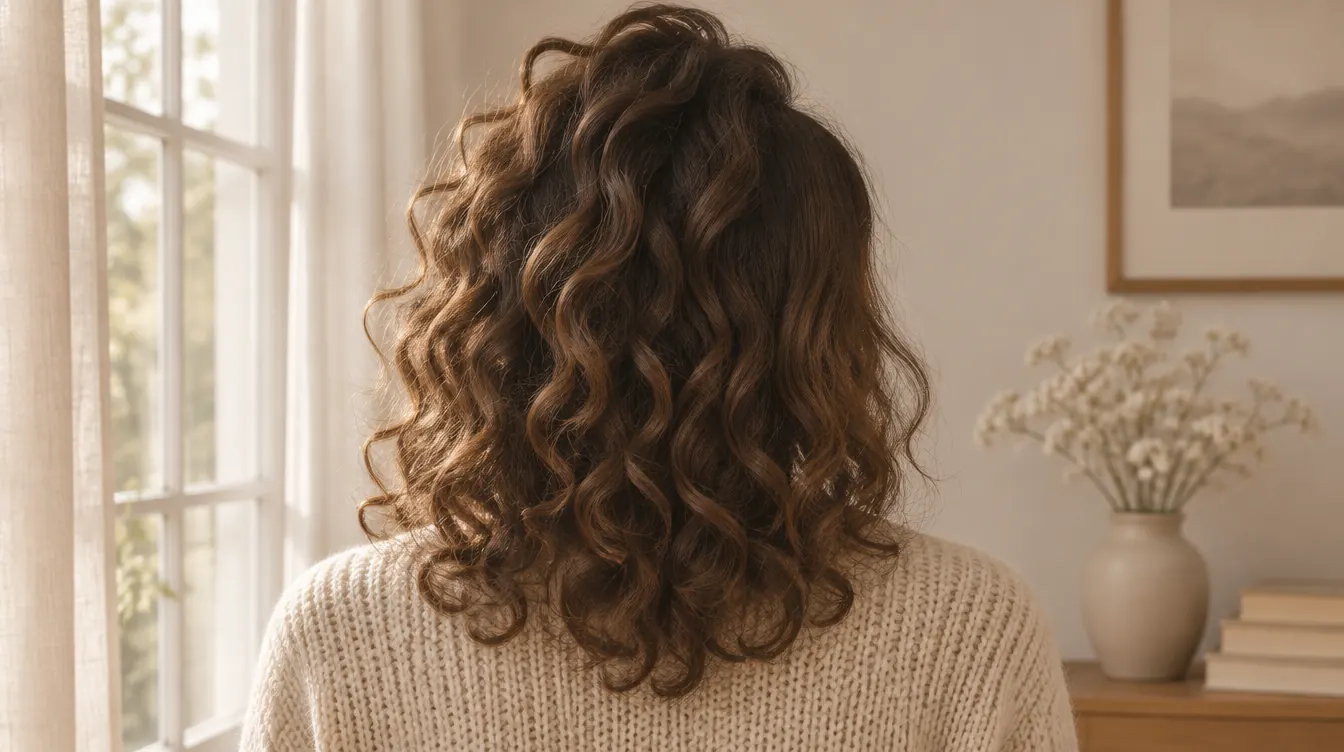
Look at the whole style in ordinary light. Decide whether you see a flattened section, a boundary you want to soften, a few tangles, or widespread residue.
Those are different jobs. Flattened shape may need a little arrangement; a knot needs gentle detangling; a coated scalp may call for cleansing rather than another styling layer.
Keep scalp comfort in the decision. Do not use fragrance, oil, or styling spray to hide persistent itch or soreness. A cosmetic refresh cannot diagnose or treat the cause.
Choose the smallest useful adjustment
| Observation | Starting action | Avoid |
|---|---|---|
| Style already looks comfortable and acceptable | Leave it alone | Adding product from habit |
| Small flattened section | Gently rearrange or use a directed local refresh | Rebuilding the whole head immediately |
| Reduced definition in one area | Try a small suitable water or product adjustment | Repeated heavy coating |
| Tangle | Use an appropriate gentle detangling method | Pulling through it during styling |
| Coated feel or scalp needs cleansing | Plan a suitable wash | Treating more cream as cleaning |
A refresh is optional. Keeping a result you already like is a valid routine choice, not a missed hair-care step.
Begin with a familiar product context
Remember what you used on wash day. Several substantial layers may make another generous dose less useful than a light adjustment.
Read whether your chosen product permits application to damp or dry hair and whether it is intended for refreshing. Do not assume a rinse-out conditioner can be left in simply because the amount is small.
The leave-in versus curl cream guide explains product roles. A label promising softness does not automatically mean the formula is the right answer when the real goal is hold or a cleaner feel.
Refresh a small area in six steps
- Identify the limited section you actually want to change.
- Gently separate it without pulling a resistant tangle.
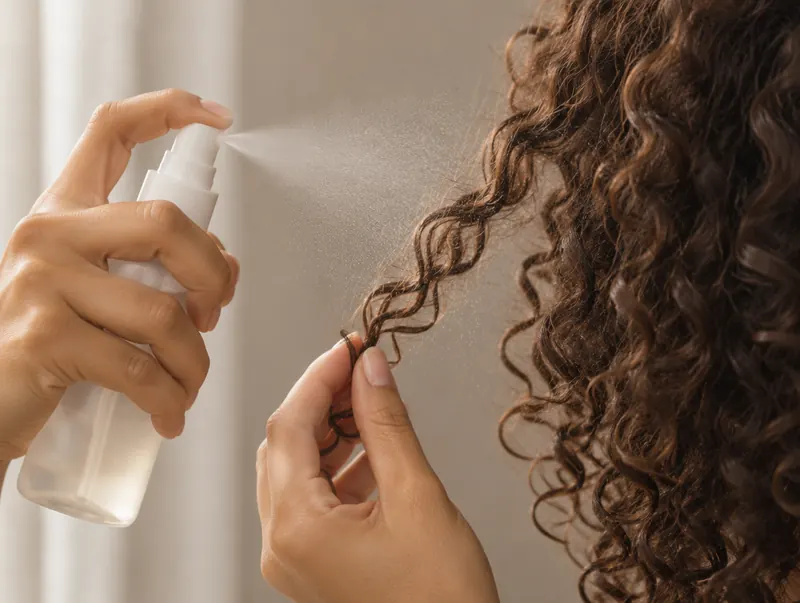
- Follow the appropriate water or product method for that item.
- Arrange the section with light handling rather than aggressive combing.
- Let it dry through your suitable chosen method.
- Inspect before repeating or adding another layer.
Start with less wetting than a complete wash unless the intended method calls for more. You can reassess a small section more easily than an unexpectedly soaked whole head before leaving home.
Use water without turning it into an improvised formula
Plain water can be part of a suitable refresh method, but the way the existing styler responds may vary. Try a small area rather than assuming every gel or cream will reactivate identically.
Keep spray bottles clean and use them appropriately. Do not mix and store diluted conditioner or several cosmetics as a homemade leave-in spray without suitable manufacturer instructions.
Avoid spraying into your eyes or breathing a product mist unnecessarily. A directed local method may be easier to control than repeatedly creating a cloud around your face.
Add fresh product only for a defined role
A tiny appropriate amount may help a section that needs a particular cosmetic effect. Apply according to the product’s directions and distribute it rather than leaving one concentrated outer patch.
If the section already feels coated, more cream may increase that feeling. Reassess the whole product stack and whether a wash would be more practical.
Do not keep adding one product after another before the first change has dried. You will lose the ability to tell which step helped and may create a result that is heavier than intended.
Handle tangles as tangles
A tangle is not simply a curl group that needs more smoothing. Pause the cosmetic styling and use an appropriate gentle conditioning and detangling method.
Work in manageable sections and stop at resistance. Do not drag a dry brush repeatedly through knots to force the style back into shape.
The detangling guide explains that separate task. If matting is severe or handling is painful, seek suitable professional help rather than making your morning refresh a pulling session.
Let the hair finish before judging the new result
A partly wet section can look darker, more grouped, or less voluminous than it will once finished. Give it appropriate drying time before concluding it needs another dose.
Use a suitable air-drying or device method. If using heat, follow device and product guidance and avoid uncomfortable scalp temperatures or prolonged close exposure.
If you cannot allow the drying time, a comfortable alternate style may be more practical that morning. Refreshing is not required to justify wearing your natural texture in a less defined arrangement.
Set a practical stopping point before you start
Decide which visible area matters to you that morning and how much drying time you can allow. Once that section reaches an acceptable result, leave the surrounding hair alone unless a separate problem needs attention. A refresh can grow into full restyling when each tiny difference becomes the next correction. Keeping the initial goal limited makes the routine easier to repeat on an ordinary day.
Review the overnight setup if the same section always needs work
Notice where flattening or tangling recurs.
The overnight curl-care guide compares loose arrangements and smooth accessories. Do not use tight tension at night simply to avoid a small refresh in the morning.
Keep sleep accessories clean and appropriately fitted. A slipping bonnet or tightly wrapped scarf may be a handling issue rather than a reason to use more styling product each day.
Know when to stop extending the style
If the scalp needs cleansing, choose a suitable wash rather than refreshing through discomfort. Widespread residue, repeated heavy additions, or a result you no longer like may also make restarting simpler.
There is no fixed number of days every wash-and-go must last. Your activity, preferences, and scalp needs are more useful than a longevity target taken from someone else’s routine.
Follow applicable patch-test directions for new products, avoid known allergens, and stop for irritation. A useful refresh is a small appearance adjustment that fits your day, not a treatment or an obligation to preserve the original style indefinitely.
Frequently asked questions
Must I wet my whole head for a refresh?
No. A few flattened or less defined sections may need only a selective adjustment. A full rewet can be appropriate for some methods, but it is not a requirement every morning.
Can I store conditioner diluted with water in a spray bottle?
Do not improvise and store a diluted cosmetic mixture without suitable manufacturer instructions. Use the product as directed rather than assuming a homemade stored spray retains the original formula’s properties.
Is more curl cream the first answer to frizz?
Not automatically. Identify whether the issue is a style preference, flattened shape, tangling, or residue. More product can create a heavier layer without solving the actual problem.
When should I wash instead of refresh?
Choose appropriate cleansing when your scalp or product residue needs it, rather than extending a style through discomfort. Seek a dermatologist’s advice for persistent itch, soreness, or unusual scalp changes.