How to Find Your Curl Type
Describe your curl pattern with an observation method, understand mixed textures, and separate curl labels from density, strand size, and hair-care needs.
Find your curl type by observing several sections of clean hair after they have dried in their usual shape without being stretched straight. Describe the visible pattern first: waves, loops, tighter coils, or a mixture. Use a chart as optional vocabulary rather than a rule that determines your whole routine.
Different charts and brands can classify borderline patterns differently. A useful description of your own hair is more valuable than repeatedly trying to earn one exact number-and-letter label.
Know what a curl label describes
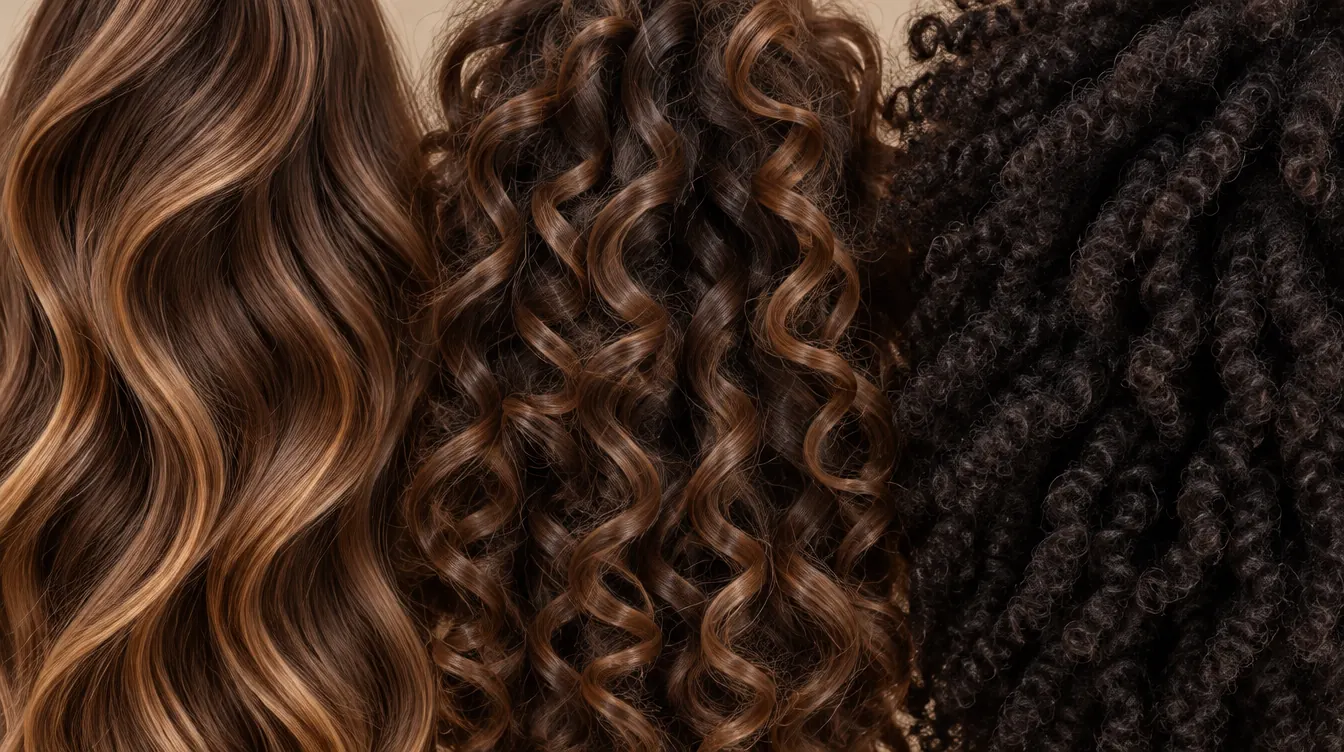
A curl chart describes the visible shape formed by the hair. Common versions use broad categories such as type 2 for waves, type 3 for curls, and type 4 for coils, sometimes divided into lettered groups.
The boundaries are descriptive rather than a universal clinical measurement. An S-shaped section may sit near a chart boundary, and tight loops may look different depending on length and styling.
Do not treat one chart as a diagnosis. It cannot tell you why a scalp is irritated, whether hair loss is occurring, or which medical treatment would be appropriate.
Separate pattern from other hair features
| Feature | What it describes | What a curl label cannot settle |
|---|---|---|
| Pattern | Resting shape of waves, curls, or coils | Every styling result |
| Strand size | Relative thickness of an individual strand | How much hair covers the scalp |
| Density | How closely hair is distributed | Individual strand thickness |
| Length | How much hair has grown out or been cut | One permanent curl category |
| Scalp needs | Comfort, oil, residue, and other concerns | A universal wash schedule |
| Product response | How a finished formula behaves for you | Guaranteed results from a chart |
These observations answer different questions. Keeping them separate helps prevent a pattern description from becoming an overly rigid product rule.
Observe under a familiar routine
Use your normal suitable cleanser and conditioner, then avoid deliberately straightening or stretching the sections you want to observe. You do not need a harsh clarifying wash merely to take a curl-type photograph.
If you use styling product, note it. A defined styled result can look different from a lightly handled result, so compare observations made under similar conditions.
Let hair reach the stage at which you normally judge the finished shape. A dripping-wet section is not identical to its dried resting pattern, and brushing or repeatedly stretching it changes what you see.
Look at several sections in six steps
- Choose an ordinary wash day rather than an unusual styled occasion.
- Use a familiar gentle routine and record any styling products.
- Allow the hair to dry using your normal suitable method without forcing a new pattern.
- Observe a front, side, back, and inner section where accessible.
- Describe each section’s resting shape in plain words.
- Compare with a chart only if the label helps you communicate those observations.
You can use a mirror or ordinary photos if helpful. Keep lighting and handling similar when comparing another day, rather than interpreting every photographic difference as a permanent change.
Start with broad words before letters
Wavy can describe sections that form bends or S-like shapes without obvious looping throughout. Curly can describe visible loops, while coily can describe tighter recurring shapes.
If a chart uses lettered subgroups, choose the closest description only when it is useful. You can say mixed loose curls and tighter sections without narrowing everything further.
The common 2A–4C chart at a glance
The most widely used system, popularized by stylist Andre Walker, splits hair into numbers for the family and letters for how tight the shape is within it. Use it as shorthand, not a verdict:
| Type | What it usually looks like |
|---|---|
| 2A | Loose, gentle bends; hair may look almost straight at the root |
| 2B | Clear S-shaped waves through the mid-lengths and ends |
| 2C | Deeper S-waves with a few loose ringlets mixed in |
| 3A | Large, loose spiral curls with a lot of shine |
| 3B | Springy, medium ringlets with more volume |
| 3C | Tight corkscrew curls packed closely together |
| 4A | Small, tight coils with a visible S or spiral shape |
| 4B | Tight zigzag pattern with sharp angles instead of round coils |
| 4C | The tightest zigzag coils, often with significant shrinkage |
Most heads include two or three neighboring types. If your crown looks like 3B and the nape like 3C, that’s normal, and “3B–3C” is a perfectly good description.
There is no need to use household objects as exact diameter standards. A strand that seems to match one object today may appear different after length, product, or handling changes.
Expect mixed patterns and different behavior
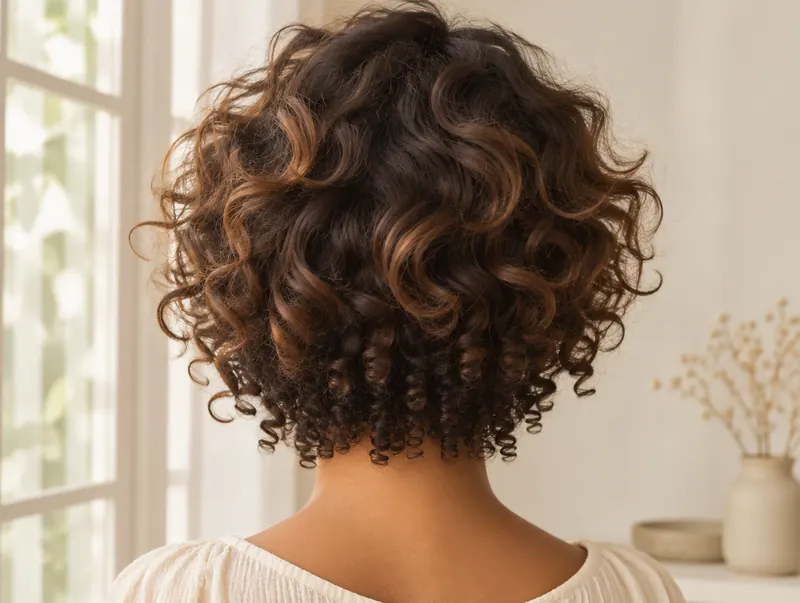
An outer section may not behave like an inner one. A shorter area may arrange differently from a longer area. Your observation can acknowledge those differences instead of choosing the most defined or most tightly shaped section as the identity of the whole head.
When asking a stylist for help, describe the actual problem and location: tangling at the back, a front section falling flatter, or a desire for more volume. That is more actionable than offering only a label.
Do not assume every difference means damage or a health condition. If a change is sudden, concerning, or accompanied by scalp symptoms or unusual shedding, seek appropriate professional advice rather than diagnosing it through the chart.
Do not use pattern to prescribe every product
A number does not tell you how much styling cream feels comfortable or whether your routine needs a leave-in. The leave-in and curl cream comparison focuses on those products’ actual roles.
Likewise, a curl label does not establish porosity. Avoid treating a single home observation or float experiment as a complete explanation of what every formula will do.
Start with the beginner curly routine, then adjust from direct observations such as manageable detangling, scalp comfort, and a finished result you like. Those provide useful feedback even before you choose a label.
Keep the observation record simple
If you photograph sections, note whether the hair was freshly washed, styled, stretched, or recently cut. Those details make a later comparison more useful without requiring a technical measurement system. Avoid comparing one close-up of wet hair with another distant photograph of a dry style and assuming the chart category must have changed. Similar conditions help you describe visible differences more accurately.
Make a practical hair description
Combine a few relevant details: mixed waves and loops, fine-feeling strands, dense back section, and a preference for light volume. That description gives you several real comparison points without pretending to measure everything precisely.
Use the same approach when reading product suggestions. A recommendation for one curl category may still be too heavy, too lightly holding, or otherwise unsuitable for your preferences.
If you want to arrange the natural pattern after washing, see the wash-and-go guide. It explains a styling process rather than requiring every curl group to look identical.
Revisit the label only when it remains useful
Hair length, cuts, chemical services, and styling can change the appearance you are describing. Keep a label flexible enough to reflect current observations rather than defending an old classification.
Your routine does not fail because a front section resembles another chart box. Comfortable handling and suitable care matter more than matching a category perfectly.
Follow product directions, stop for irritation, and consult a dermatologist for persistent scalp concerns.
Frequently asked questions
Can one person have several curl types?
Yes. Different sections can form different shapes, and one label may not describe the whole head well. Record what you see in several areas instead of forcing every strand into the same category.
Does a tighter pattern mean thicker strands?
Not necessarily. Pattern and individual strand size describe different features. A tightly coiled section can have fine strands, while a looser pattern can include thicker individual strands.
Can a photo identify the right products for me?
A photo can show an appearance but cannot establish every care need, scalp concern, or product response. Use labels as a communication aid rather than a complete shopping prescription.
Should I pull a curl straight to classify it?
Observe the natural resting shape without stretching for classification. Stretching changes the appearance you are trying to describe and does not by itself identify a useful care routine.