How to Detangle Curly Hair Gently
Detangle curly hair in conditioned manageable sections, work gradually from the ends, and respond to knots without dragging a comb through resistance.
Detangle curly hair by working through manageable conditioned sections, starting at the ends and moving gradually upward. Use fingers, a wide-toothed comb, or another suitable tool without dragging through resistance. The goal is easier handling with less force, not completing a fixed number of brush passes.
For many curly routines, the useful time is during conditioning or with an appropriate wet-hair detangling product. Wet hair still needs care; water and conditioner do not make pulling harmless.
Prepare before the first pass
Set out the product you intend to use, a suitable clean tool, and comfortable sectioning clips if helpful. Read whether the product belongs on wet, damp, or dry hair and whether it should be rinsed out afterward.
Remove sharp jewelry or adjust anything that catches strands. Check the comb or brush for broken teeth, sharp damage, or trapped old hair that interferes with its use.
Position yourself so you can reach the section without twisting painfully or holding your arm awkwardly for a long time. Comfort helps you use controlled movements instead of rushing through the last part.
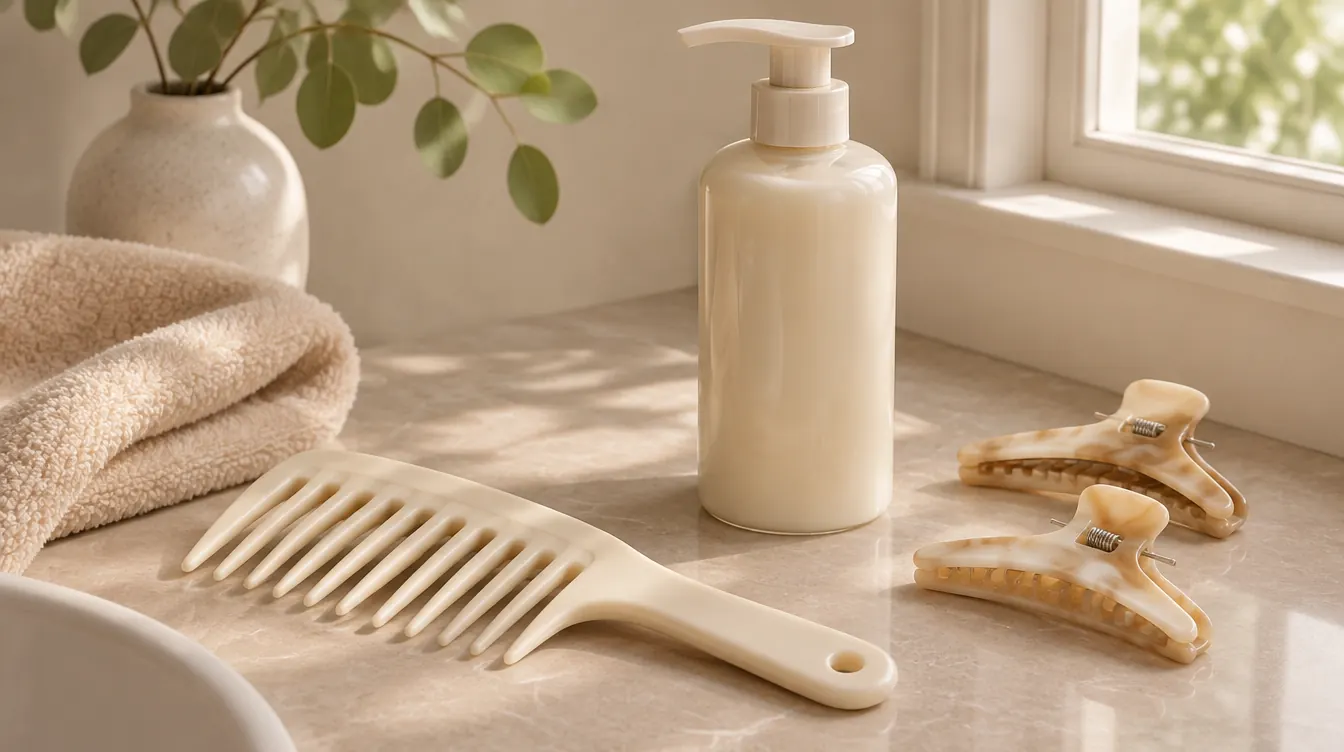
Choose a manageable section size
A very large section can hide resistance underneath the surface. Divide the hair into smaller portions you can hold and observe comfortably rather than combing the whole head as one mass.
There is no universal section count. Length, density, access, and the way your hair tangles determine what is practical. A number used in a tutorial may be too many or too few for you.
Keep completed sections distinct when that helps prevent repeatedly working the same hair. Clips should hold comfortably without pulling tightly at the scalp or trapping hair in a sharp mechanism.
Match the tool to the handling task
| Option | Useful role | What to watch |
|---|---|---|
| Fingers | Feel a small knot and separate gently | Nails or jewelry catching strands |
| Wide-toothed comb | Controlled gradual work through a section | Broken teeth and forceful pulling |
| Suitable curly-hair detangling brush | A directed method for your hair | Treating flexibility as permission to pull harder |
| Sectioning clips | Keep completed and unfinished portions apart | Tight tension or trapped strands |
Start with the simplest suitable option. An expensive brush is not a substitute for smaller sections and a gentle pace.
Use conditioning according to its directions
Distribute a suitable conditioner or detangling product through the section rather than coating only the visible outside. Follow its application amount and any time or rinsing instructions.
AAD guidance supports detangling curly hair while wet and conditioned, using gentle sectioning and suitable tools. That is not a reason to leave an ordinary rinse-out conditioner in the hair indefinitely or force a comb through a knot.
The leave-in versus curl cream guide helps when product roles are unclear. A styling cream that creates a cosmetic finish is not automatically intended as your main detangler.
Work upward through six controlled steps
- Prepare one section with the suitable water and product method.
- Hold it comfortably without pulling tightly from the scalp.
- Begin near the ends with short gentle movements.
- Pause at resistance and work on that limited tangle.
- Move gradually higher as the lower part becomes manageable.
- Set the completed section aside and continue elsewhere.
Do not begin with a long stroke from roots to tips simply because that is the direction the hair grows. Lower tangles need attention before a full-length pass can move through comfortably.
Inspect the result without repeatedly combing a section that is already manageable. More passes are not automatically more thorough and can disturb the arrangement you wanted to preserve.
Slow down at a stubborn knot
Stop when the tool meets resistance instead of increasing force. Make the section smaller and use your fingers gently to understand where the tangle is.
Reapply or adjust a suitable product only under its directions. Repeatedly adding a large amount without changing section size may create more residue while leaving the knot unchanged.
Do not use a sharp object to pick at a knot near your scalp. If matting is severe, the section is painful, or you cannot progress gently, seek help from an appropriate hair professional rather than escalating pulling or making an impulsive cut.
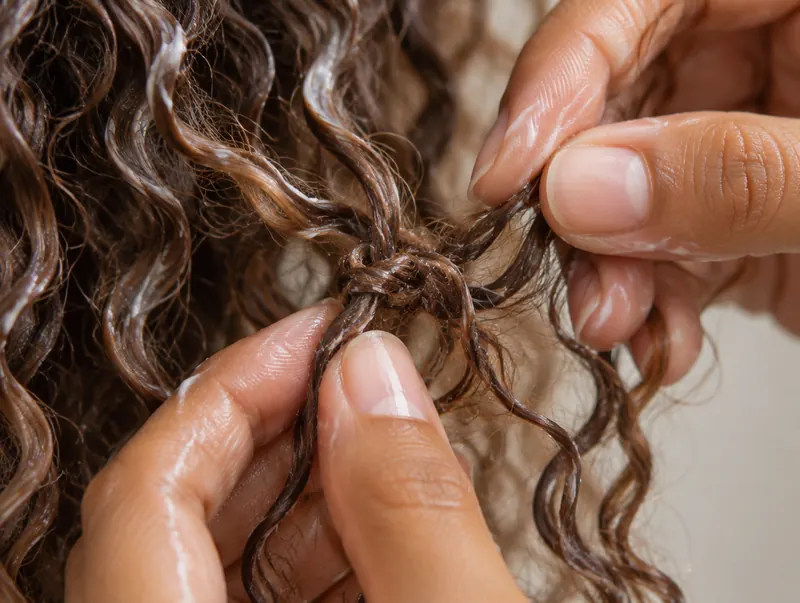
Choose an order you can repeat comfortably
Start with an accessible section so you can establish the method before reaching a more awkward area. Keep completed hair distinct and take a short pause if your grip becomes tense. Rushing the final back section because your arms are tired can undermine otherwise gentle handling. Adjust the section size or your position rather than compensating with longer harder comb strokes.
Rinse or continue according to the product
If you detangled with rinse-out conditioner, complete its rinsing instructions. Do not keep extra residue simply because the hair felt slippery during the process.
If using a leave-in designed for the method, follow its instructions before styling.
The beginner curly routine places detangling within washing and styling so the steps remain distinct. You do not need a separate new product for every stage if the existing appropriate items already serve them.
Avoid recreating the tangle immediately
After rinsing, remove excess water gently rather than rubbing the lengths into a rough bundle. Keep handling manageable while applying your chosen styling product.
If you rework a finished style repeatedly with a comb, you may change the definition or volume. Decide whether you need actual detangling or only a small appearance adjustment before starting again.
The day-2 refresh guide explains selective adjustments without turning every morning into a complete wash-day combing session.
Notice comfort and unexpected changes
A little loose hair may be visible during ordinary grooming, but a tutorial cannot tell you whether your amount is normal from a description alone. Seek a dermatologist’s advice for unusual shedding, scalp pain, persistent irritation, or other concerning changes.
Do not interpret soreness as proof that detangling is effective. Stop and reconsider the method. Hair care should not require repeatedly working through pain to finish a routine.
Clean your tools appropriately afterward and remove trapped hair using a method suitable to their construction. A damaged tool does not become suitable merely because it remains your favorite shape.
Make the next session easier to assess
Keep a brief note about the area that tangled, the product used, and whether smaller sections helped. Change one practical variable next time rather than replacing every item in the routine.
If a section repeatedly needs too much effort, professional advice about handling, styling, or a manageable cut may be more useful than buying another brush.
Frequently asked questions
Should I detangle curls completely dry?
For a typical curly-hair routine, wet conditioned detangling is a more useful starting point than forceful dry brushing. Follow your product and tool directions, and adjust if the method feels uncomfortable.
Does a wide-toothed comb guarantee no breakage?
No tool guarantees that. Gentle handling, manageable sections, suitable conditioning, and stopping at resistance matter as well as the space between the teeth.
Can I keep pulling through one stubborn knot?
Do not repeatedly drag a tool through the same resistance. Pause, make the section smaller, and use a suitable gentle method; seek professional help for severe matting rather than escalating force.
How often must I detangle?
Use the needs of your wash and styling routine rather than a universal daily rule. Avoid unnecessary repeated combing of a finished style, and address tangles gently when appropriate.